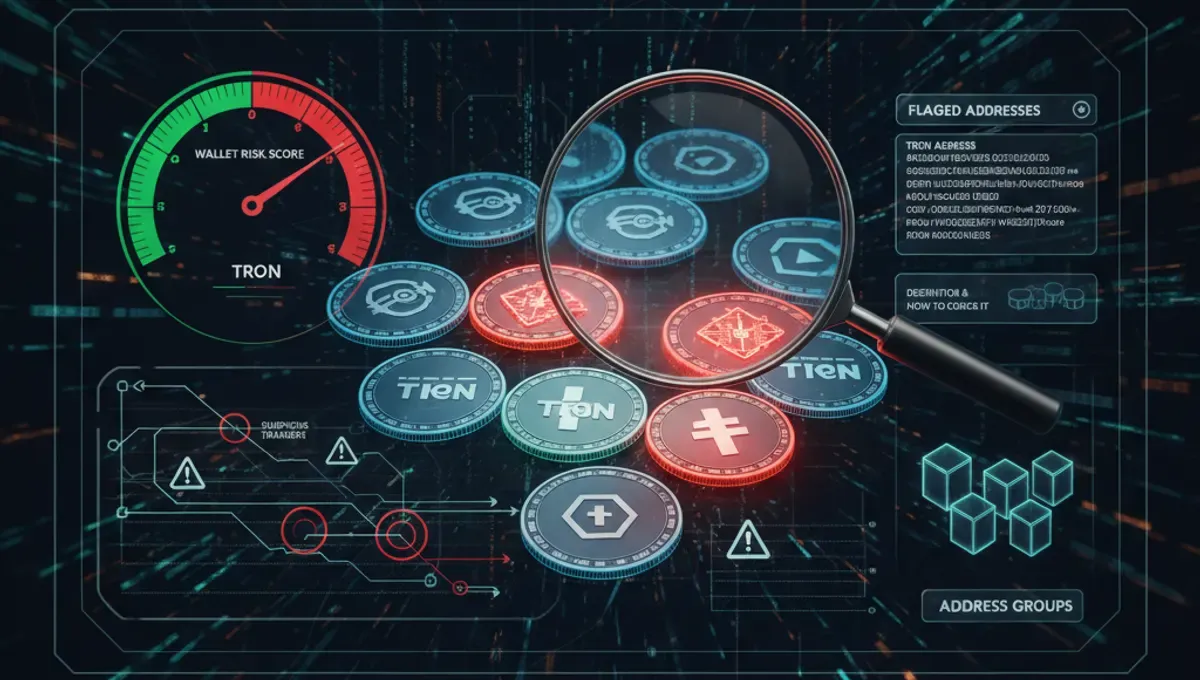
What Is a TRON Address and Why AML Screening Matters
A TRON address is a 34-character alphanumeric string starting with 'T' that identifies a wallet on the TRON network. Unlike traditional bank accounts, TRON addresses are pseudonymous—anyone can create one without identity verification. This anonymity makes TRON attractive for legitimate users but also creates compliance risk. Exchanges and payment processors must screen TRON addresses to avoid receiving stolen or sanctioned funds. If your exchange account receives flagged coins, the funds can be frozen, your account suspended, or your business reported to regulators. An AML check on a TRON address reveals whether it has transaction history linked to mixers, darknet markets, scams, or stolen cryptocurrency. Running this check before accepting payment is the most effective way to stay compliant and protect your account.
How to Check a TRON Address: Step-by-Step Guide
To check a TRON address for AML risk, follow these steps:
- Obtain the TRON address from the sender (it starts with 'T' and is 34 characters long).
- Visit a trusted AML screening service—our curated list of verified AML services includes tools that support TRON address lookup and provide risk scoring.
- Paste the TRON address into the search field.
- Review the risk score and transaction history report. The report will show if the address has been flagged for darknet exposure, mixer usage, scam involvement, or sanctions.
- Check the risk level: green (low risk), yellow (medium risk), or red (high risk).
- If the address is flagged, do not accept the payment. Contact the sender to clarify or ask for an alternative wallet.
- Document the check result for compliance records.
Most AML services also support checking TRC20 token addresses and frozen USDT wallets, so you can verify the full transaction path if needed.
Understanding TRON Address Risk Scores and What They Mean
A TRON address risk score is a numerical rating (usually 0–100 or low/medium/high) that indicates the likelihood the wallet is involved in illicit activity. Here's what each level typically means:
Low Risk (0–20): The address has minimal or no flagged transaction history. It is safe to accept payment from this wallet.
Medium Risk (21–60): The address has some exposure to risky behavior—perhaps minor mixer usage or interaction with lower-confidence scam addresses. Proceed with caution; request additional verification from the sender.
High Risk (61–100): The address is directly linked to darknet markets, stolen funds, sanctions lists, or confirmed scams. Do not accept payment from this wallet.
Risk scores are calculated using blockchain analytics that track transaction patterns, wallet clustering, and known blacklists. A TRON address checker will also flag specific risk categories: darknet exposure, mixer usage, stolen funds, sanctions, gambling, and scam involvement. Understanding these categories helps you decide whether to accept or reject a payment.
What Happens If You Receive Tainted TRON Coins
If you receive USDT or TRX from a flagged TRON address, your exchange account faces several risks:
Frozen Funds: Exchanges monitor incoming deposits for AML risk. If coins are flagged as tainted, the exchange may freeze your account and the funds indefinitely.
Account Suspension: Your trading and withdrawal privileges may be suspended while the exchange investigates.
Regulatory Reporting: The exchange may file a Suspicious Activity Report (SAR) with financial regulators, creating a compliance record against you.
Reputational Damage: Repeated receipt of tainted coins can result in permanent account closure and blacklisting from other platforms.
To avoid this, always run a TRON address check before accepting payment. If you have already received flagged coins, contact your exchange's compliance team immediately to explain the source and request review. Proactive disclosure is better than being discovered during an audit.
Common Risk Categories in TRON Address Screening
When you check a TRON address, the AML report will categorize risk by source. Here are the most common flags:
Darknet Exposure: The address has received or sent funds to known darknet marketplace wallets (e.g., illegal goods, weapons, drugs).
Mixer Usage: The wallet has interacted with coin mixers or tumblers designed to obscure transaction trails.
Stolen Funds: The address is linked to cryptocurrency stolen from exchanges, wallets, or users via hacks or theft.
Sanctions: The wallet belongs to an individual or entity on government sanctions lists (OFAC, EU, UN).
Scam Involvement: The address is associated with Ponzi schemes, rug pulls, or confirmed fraud.
Gambling: The wallet has transacted with unlicensed or high-risk gambling platforms.
Each category carries different compliance weight. Sanctions and stolen funds are the highest priority to avoid. Mixer usage and gambling are medium risk. Understanding these categories helps you make informed decisions about which payments to accept.
Best Practices for Verifying TRON Addresses Before Payment
To minimize AML risk when receiving TRON payments, follow these practices:
Always Screen Before Accepting: Run a TRON address check every time you receive a new wallet address, even from repeat customers. Risk profiles change as wallets accumulate transaction history.
Set a Risk Threshold: Decide in advance what risk score you will accept. Most businesses reject anything above medium risk (60+).
Request Sender Verification: If a TRON address is flagged, ask the sender to provide proof of funds origin or use an alternative wallet.
Keep Records: Document every address check, the date, the risk score, and your decision. This creates an audit trail proving due diligence.
Use Verified Services: Check wallets through the trusted AML services listed on our curated directory. These tools are designed for compliance and provide detailed reports.
Monitor Ongoing Risk: Some services offer continuous monitoring. If a previously clean address becomes flagged later, you'll be notified.
Educate Your Team: Ensure everyone handling payments knows how to check a TRON address and understands the consequences of accepting tainted coins.
Choosing the Right TRON Address Checker for Your Business
Not all AML services support TRON address lookup equally. When selecting a tool, look for:
TRON/TRC20 Support: Confirm the service checks TRON addresses and TRC20 tokens like USDT, not just Bitcoin or Ethereum.
Real-Time Screening: The tool should provide instant risk scores, not delayed reports.
Detailed Risk Reporting: You need to see specific flags (darknet, mixer, sanctions, stolen funds) not just a generic score.
API Integration: If you process many payments, choose a service with API access so you can automate TRON address checks.
Compliance Documentation: The service should generate reports suitable for regulatory audits.
Transparent Pricing: Understand whether checks are per-transaction, monthly subscription, or volume-based.
Our site maintains a curated list of verified AML services that meet these criteria and support TRON address screening. Starting with one of these trusted providers is the safest way to ensure your TRON address checks are reliable and compliant.
Frequently asked questions
How do I check if a TRON address is safe before accepting payment?
Use an AML screening service that supports TRON address lookup. Paste the address (starting with 'T') into the tool, review the risk score and flags, and check for darknet exposure, mixer usage, stolen funds, or sanctions. If the score is low risk, it is safe to accept. If medium or high risk, decline the payment or request verification from the sender.
What does a high-risk TRON address mean?
A high-risk TRON address has been flagged for involvement in illegal activity—typically darknet markets, stolen cryptocurrency, sanctions violations, or confirmed scams. Do not accept payment from high-risk addresses. Receiving flagged coins can result in your exchange account being frozen and funds seized by regulators.
Can I check a TRON address for free?
Some AML services offer limited free TRON address checks, but comprehensive screening with detailed risk reports usually requires a paid subscription or per-transaction fee. Our curated list of verified AML services includes options at different price points. Free tools are useful for occasional checks; businesses handling regular payments should use a paid service for full compliance coverage.
What is a TRON address checker and how does it work?
A TRON address checker is a blockchain analytics tool that scans a TRON wallet for transaction history, risk flags, and links to known illicit activity. It cross-references the address against darknet databases, sanctions lists, stolen-fund registries, and mixer wallets. The tool returns a risk score and detailed report showing specific threats (darknet, mixer, scam, sanctions, gambling, stolen funds).
What happens if my exchange receives USDT from a flagged TRON address?
Your exchange may freeze the funds and your account pending investigation. The exchange could file a Suspicious Activity Report with regulators, suspend your trading privileges, or close your account permanently. To avoid this, always run an AML check on TRON addresses before accepting payment. If you have already received flagged coins, contact your exchange's compliance team immediately.