What Is a TRON Address and Why Check It
A TRON address is a unique identifier on the TRON blockchain, formatted as a 34-character string starting with 'T'. It holds TRX (the native token) and TRC20 tokens like USDT. TRON addresses are pseudonymous but fully traceable on the public ledger, meaning blockchain analysts can link wallet activity to known risk sources. Checking a TRON address means querying it against AML (anti-money laundering) databases to identify whether it has received or sent funds from darknet markets, gambling platforms, mixers, scam operations, or sanctioned entities. This matters because exchanges and payment processors flag wallets with tainted coin exposure, potentially freezing your account or rejecting deposits. A TRON address check reveals the wallet's transaction history risk profile before you accept payment.
How TRON Address Checker Tools Work
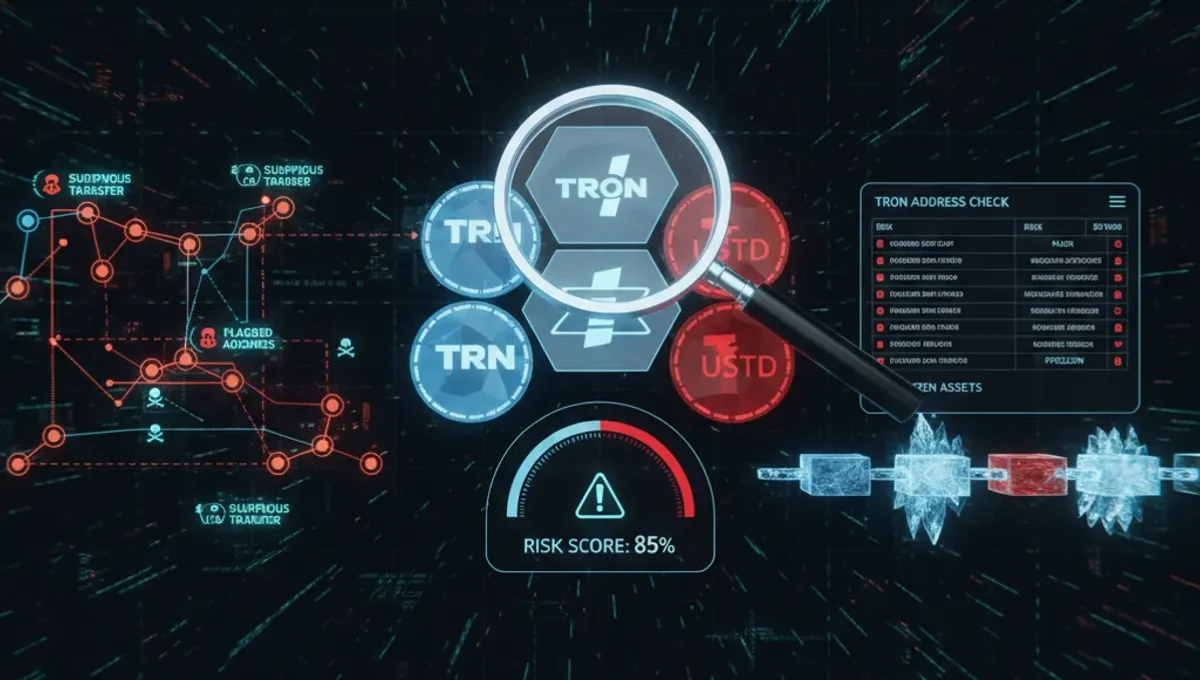
A TRON address checker uses blockchain analytics to scan the wallet's incoming and outgoing transactions against known risk databases. The process works in these steps:
- You enter the TRON address into the checker tool.
- The tool queries the TRON blockchain ledger for all transactions linked to that address.
- It cross-references transaction counterparties against darknet market wallets, mixer services, stolen fund databases, sanctions lists, and scam registries.
- It assigns a risk score based on the number and severity of flagged transactions.
- It returns a report showing the risk level, transaction sources, and specific red flags. Most TRON address lookup services provide instant results. The checker does not modify the wallet or require any action from the address owner; it is purely a read-only screening tool. Results depend on the quality and currency of the underlying risk databases.
What Does a TRON Address Risk Score Mean
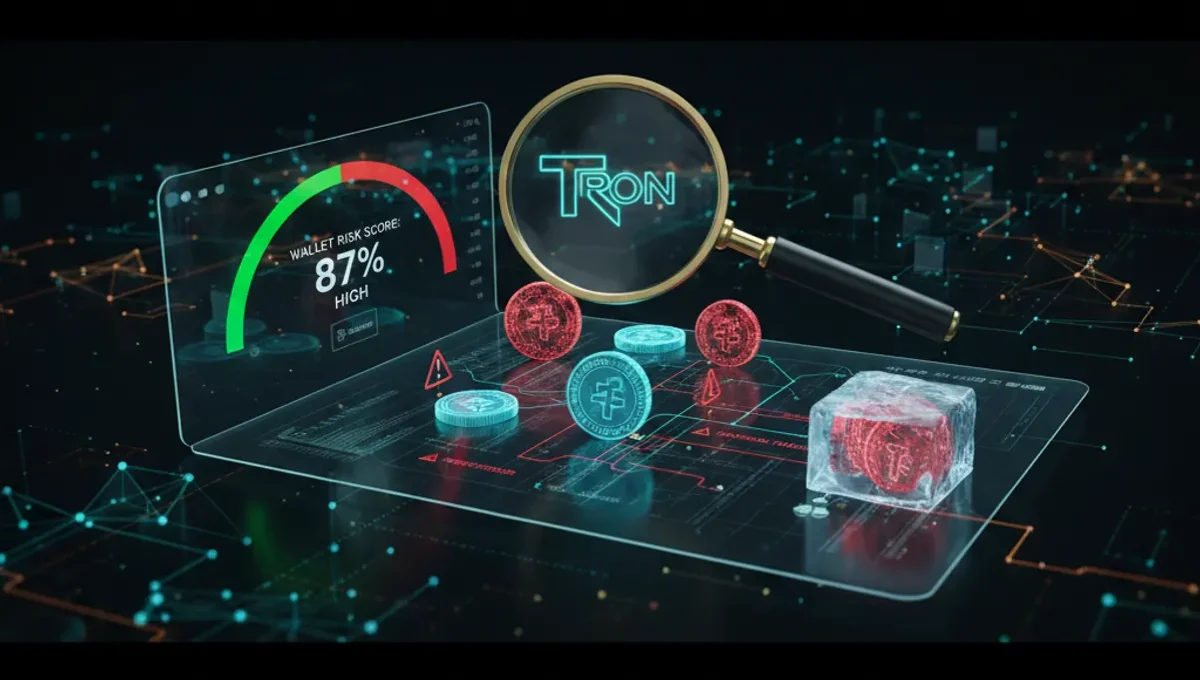
A risk score is a numerical rating (often 0–100 or low/medium/high) that reflects the likelihood a wallet has received tainted coins or engaged in suspicious activity. Here is how to interpret common risk levels:
- Low risk (0–20): Minimal or no flagged transactions; safe to accept.
- Medium risk (21–50): Some exposure to mixers or unverified sources; acceptable for most use cases but warrants review.
- High risk (51–80): Multiple transactions from darknet markets, gambling, or scams; significant compliance concern.
- Critical risk (81–100): Direct links to stolen funds, sanctions lists, or active darknet operations; do not accept.
Risk scores are not binary; a wallet may have one old transaction from a mixer years ago and still be usable today. Context matters: a single transaction from a gambling site may be less concerning than repeated activity. Your exchange or payment processor sets acceptable thresholds. Most institutions reject critical-risk wallets outright and scrutinize high-risk ones. A TRON address check report should explain which specific transactions triggered the score, not just a number.
How to Check a TRON Address Before Accepting Payment
Follow these steps to verify a TRON wallet address for risk:
- Copy the TRON address (starting with 'T') from the sender or invoice.
- Visit a trusted TRON address checker tool. Our curated list of verified AML services on this site includes tools that support TRON screening; start there for reliable results.
- Paste the address into the checker's search field.
- Review the risk score and transaction report. Look for: - Darknet market exposure - Mixer or tumbler activity - Scam or fraud flags - Sanctions list matches - Stolen fund indicators
- If the risk score is low or acceptable for your threshold, proceed with the transaction.
- If the score is high or critical, decline the payment or escalate to your compliance team.
- Document the check result for your records in case of future disputes or audits.
Do not rely on a single checker; if a result is borderline or critical, cross-check with a second service. Most AML tools return results within seconds.
Common Red Flags in TRON Address Lookup Results
When you perform a TRON address lookup, watch for these specific warning signs:
- Mixer or tumbler transactions: Repeated sends to known mixing services suggest an attempt to obscure fund origin.
- Darknet market links: Direct transactions with addresses flagged as darknet marketplace wallets indicate illicit activity.
- Stolen fund indicators: Wallets that received coins from known theft or hacking incidents carry legal and compliance risk.
- Sanctions list matches: Any connection to sanctioned entities (jurisdictionally dependent) triggers regulatory violations.
- Gambling platform exposure: Some jurisdictions and exchanges restrict gambling-linked funds.
- Scam or fraud reports: Wallets linked to known Ponzi schemes, rug pulls, or phishing attacks.
- Rapid mixing patterns: Multiple transactions to different addresses in short timeframes may indicate layering (money laundering).
- Newly created wallets with large transfers: Wallets created moments before receiving large sums are higher risk.
A single flag does not always mean reject; context and your compliance policy determine action. Document all flags for audit trails.
What Happens If Your TRON Wallet Is Flagged as Dirty
If your TRON address is flagged as high-risk or tainted, several consequences may follow:
- Exchange account freeze: Centralized exchanges may freeze your account pending investigation.
- Deposit rejection: Exchanges may refuse to accept deposits from flagged addresses.
- Withdrawal delays: Compliance teams may hold outgoing transactions for manual review.
- Account closure: Repeated tainted coin deposits can result in permanent account termination.
- Regulatory reporting: Exchanges may file Suspicious Activity Reports (SARs) with financial authorities.
- Reputational damage: Your wallet address may be added to public risk databases.
If your wallet is flagged, contact your exchange's compliance team immediately. Provide documentation of the transaction source and explain any legitimate reason for the flagged activity (e.g., you received funds from a mixer unknowingly). Some flags can be cleared with proper documentation. Do not attempt to hide flagged activity; transparency improves outcomes. Going forward, use a TRON address checker before accepting large payments to avoid this situation.
Choosing a Reliable TRON Address Checker
Not all TRON address checkers are equal. When selecting a tool, consider:
- Database coverage: Does it include darknet markets, mixers, sanctions lists, and stolen fund registries?
- Update frequency: Are risk databases refreshed daily or weekly?
- Accuracy: Does the tool provide specific transaction details, not just a score?
- Speed: Do results return in seconds?
- Transparency: Does the report explain which flags triggered the risk score?
- Privacy: Does the tool log your queries or sell data?
- Cost: Is there a free tier for basic checks, or do you need a paid plan?
- Support: Can you contact the provider if results seem incorrect?
Our site maintains a curated list of verified AML services that support TRON address screening. These providers have been vetted for accuracy, compliance, and reliability. Starting with a trusted service from that list is the safest way to begin your TRON address check workflow. Avoid generic blockchain explorers; they show transaction history but do not provide AML risk analysis.
Frequently asked questions
What does a TRON address checker do?
A TRON address checker scans a wallet against AML databases to detect exposure to darknet markets, mixers, stolen funds, and sanctions lists. It assigns a risk score and returns a report showing flagged transactions. The tool helps you verify whether a TRX or USDT wallet is safe to receive payment from before accepting it.
Is it free to check a TRON address?
Many TRON address checkers offer free basic lookups with limited detail. Paid plans typically provide deeper transaction analysis, historical reports, and batch checking. Our curated list of verified AML services includes both free and premium options. Start with a free check; upgrade if you need detailed compliance reports.
Can I check a TRON address without revealing my identity?
Yes. TRON address checks are read-only queries against public blockchain data. You do not need to create an account or provide personal information to perform a basic lookup. However, if you use a paid service or batch checking, you may need to register. Privacy policies vary; review the provider's terms before use.
What should I do if a TRON address shows high-risk flags?
Do not accept payment from a high-risk or critical-risk TRON address without escalating to your compliance team. If you have already received funds, contact your exchange immediately and provide the AML check report. Document the transaction and any supporting evidence. Your exchange may freeze the funds pending investigation.
How often should I check TRON addresses?
Check every TRON address before accepting payment, especially for large transactions. If you receive regular payments from the same address, perform a check at least monthly to catch new risk flags. For high-volume operations, integrate automated TRON address checking into your payment workflow using verified AML services.