What Is an AML Crypto Check and Why It Matters
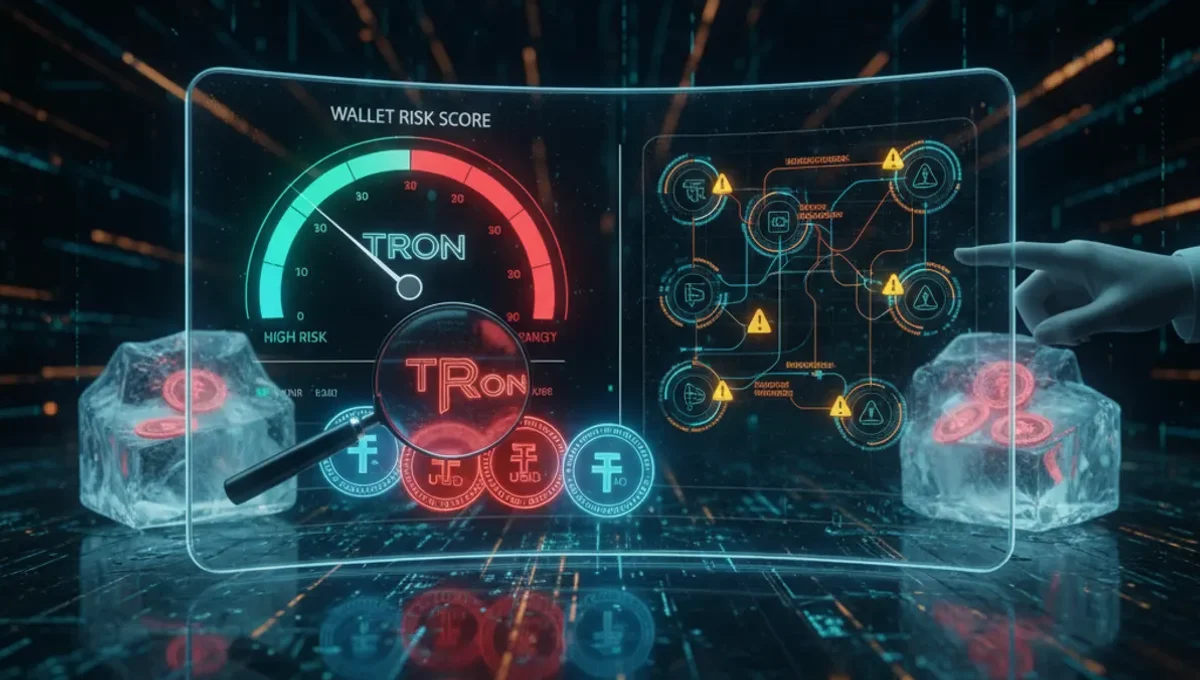
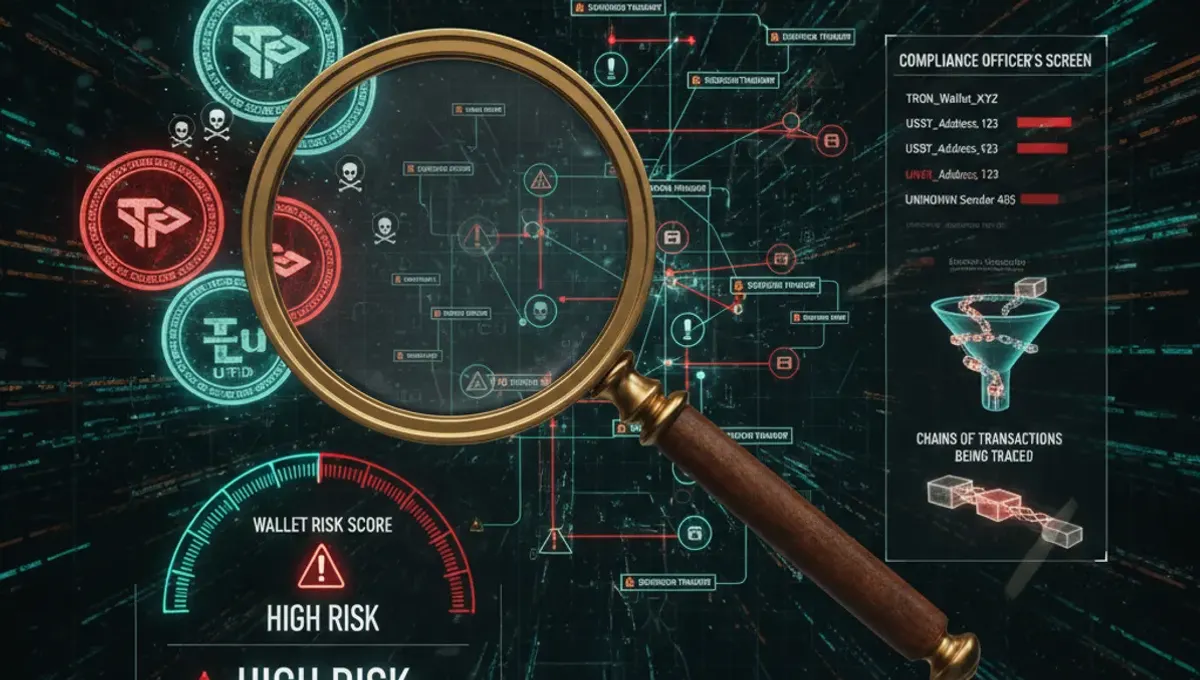
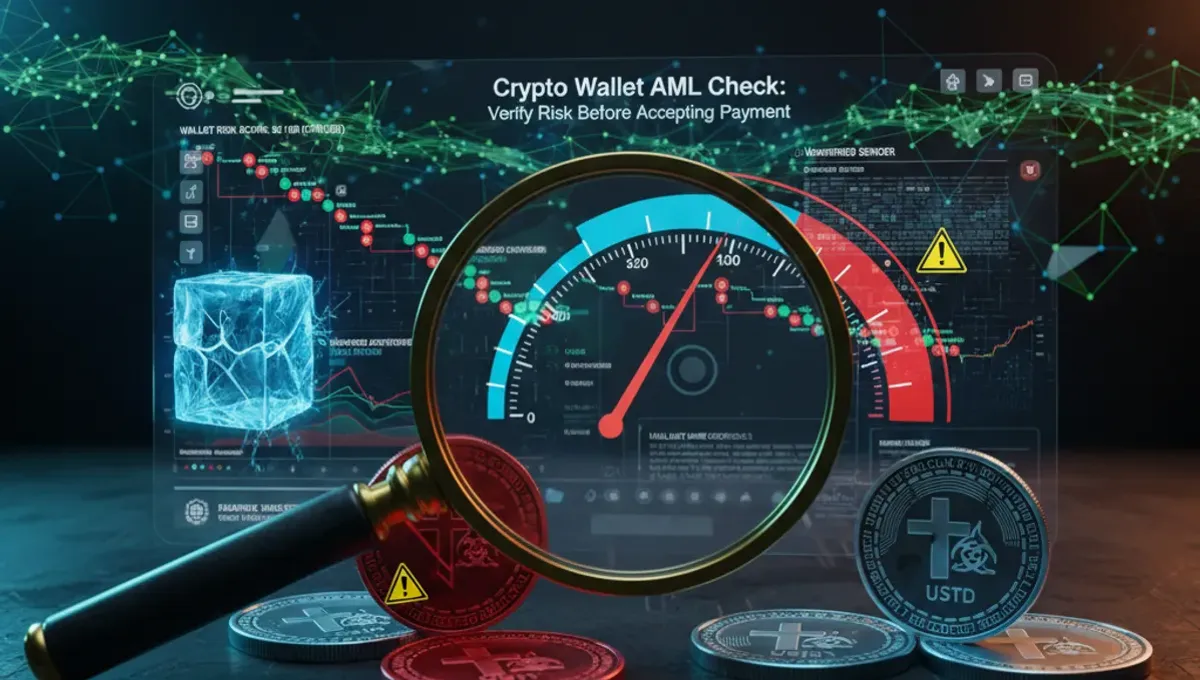
An AML crypto check screens a blockchain address against multiple risk databases to flag whether coins have been tainted by illegal activity. AML stands for anti-money laundering; in crypto, it means checking if a wallet or transaction has exposure to mixers, darknet markets, ransomware, theft, or sanctioned entities.
When you receive USDT, TRX, BTC, or ETH from an unknown sender, that address may carry hidden risk. If those coins are flagged as dirty, your exchange may freeze your account during compliance review, or reject the deposit entirely. A free AML crypto check catches this before the coins hit your wallet.
Exchanges use blockchain analytics and KYT (Know Your Transaction) tools to monitor incoming funds. If your account receives flagged coins, you face delays, account restrictions, or permanent bans. Running your own free AML check first puts you in control.
How Free AML Crypto Wallet Checks Work
Most free AML crypto wallet check tools follow a simple process:
- Enter the wallet address (TRC20, ERC20, BTC, or other blockchain format).
- The service queries its risk database against known darknet wallets, theft databases, mixer outputs, and sanctions lists.
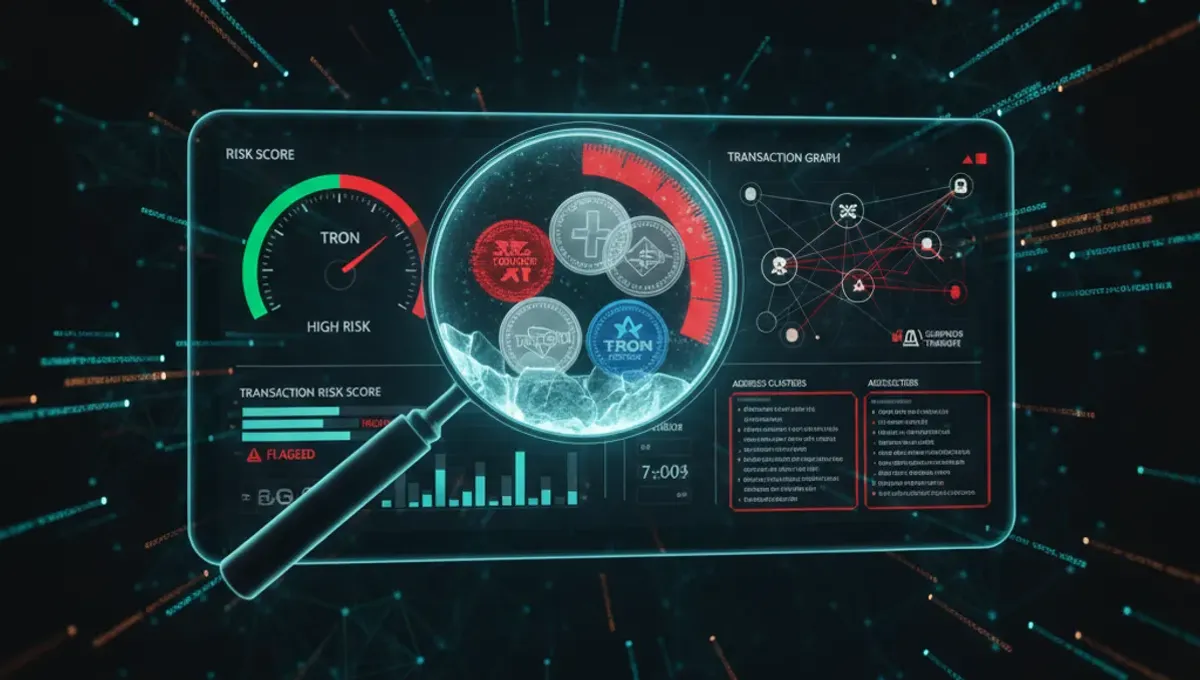
- You receive a risk score (typically 0–100 or Low/Medium/High) within seconds.
- The report shows which risk categories apply: mixer exposure, darknet links, scam reports, stolen funds, or sanctions flags.
Free tiers usually show a summary risk score and basic category flags. Paid plans unlock full transaction history, detailed fund flow analysis, and downloadable compliance reports.
The accuracy depends on the service's database size and update frequency. Larger blockchain analytics firms maintain more comprehensive darknet and theft databases. Free AML crypto checks work best as a first-pass screening; if you need detailed evidence for compliance, a paid report is more thorough.
Free vs. Paid AML Crypto Check Services
Free AML crypto check tools offer quick risk screening at no cost, but come with limits:
Free tier features: - Single wallet lookup per query - Basic risk score (Low/Medium/High or 0–100) - Summary of risk categories (darknet, theft, mixer, sanctions) - Results in seconds - No account required for some services
Paid tier features: - Unlimited lookups - Full transaction history and fund flow tracing - Detailed compliance reports (PDF export) - Batch address screening - API access for exchanges and businesses - Historical data and trend analysis
For casual users checking a single incoming address, free AML crypto check services are sufficient. For businesses, exchanges, or frequent traders, a paid subscription provides audit trails and detailed documentation needed for regulatory compliance.
Our curated list of verified AML services on this site includes both free and paid options, vetted for accuracy and reliability. Start there to find a service that matches your screening needs.
Step-by-Step: How to Check a Wallet Address for Risk
Follow these steps to run a free AML crypto check on any incoming address:
- Copy the wallet address. Get the full address from the sender (e.g., a TRC20 USDT address on Tron, or an ERC20 address on Ethereum).
- Visit an AML check service. Use one of the trusted services listed on our AML Services page.
- Paste the address into the search box. Select the correct blockchain if prompted (Tron, Ethereum, Bitcoin, etc.).
- Click "Check" or "Scan". The service queries its database.
- Review the risk score. A Low score means minimal darknet or theft exposure. Medium flags possible mixer or scam links. High indicates strong darknet, sanctions, or theft signals.
- Read the category breakdown. Check which risk factors apply: darknet, stolen funds, mixer, scam, sanctions, gambling.
- Decide whether to accept. Low-risk addresses are safe. Medium-risk may be acceptable depending on your risk tolerance. High-risk addresses should be rejected or investigated further.
If the address shows High risk, ask the sender for an alternative wallet or decline the payment. Do not assume a Medium score is safe; review the specific categories flagged.
Understanding Risk Score Levels and What They Mean
AML crypto check services assign risk scores to help you make fast decisions. Here's what each level typically means:
Low Risk (0–30 or Green): - No known darknet, theft, or sanctions exposure. - Safe to accept for most users and exchanges. - May have minor historical activity but no red flags.
Medium Risk (31–70 or Yellow): - Possible mixer exposure or indirect darknet links. - May have received coins from flagged wallets in the past. - Acceptable for some businesses; others may require further review. - Check the specific categories before deciding.
High Risk (71–100 or Red): - Strong darknet, theft, ransomware, or sanctions signals. - Direct links to known illegal markets or stolen funds. - Most exchanges will freeze or reject these coins. - Decline unless you have legal reason to investigate further.
Risk scores are not binary judgments of legality; they reflect exposure to known bad actors. A Medium-risk address may belong to a legitimate user who received mixed coins unknowingly. A High-risk address is a strong warning sign. Use the scorechain free AML crypto check or similar tools to see the specific risk categories, not just the overall score.
Common Risk Categories: Darknet, Theft, Mixers, and Sanctions
When you run an AML crypto check, the report flags specific risk categories. Understanding each helps you assess whether to accept the coins:
Darknet Exposure: - Wallet has received or sent coins to known darknet markets. - High darknet flags mean direct illegal marketplace links. - Exchanges almost always reject these.
Stolen Funds: - Coins traced to theft, hacks, or ransomware attacks. - Legitimate victims may try to move stolen coins; exchanges freeze them. - Accepting stolen coins can make you liable in some jurisdictions.
Mixer Usage: - Wallet has interacted with coin mixers or tumblers. - Mixers obscure transaction history; exchanges view them as high-risk. - Medium-risk flag; some exchanges tolerate mixer exposure, others don't.
Sanctions Lists: - Address linked to sanctioned entities or countries (OFAC, EU, UN lists). - Illegal to transact with in most jurisdictions. - Automatic rejection by regulated exchanges.
Scam or Fraud Reports: - Address reported by users or flagged in scam databases. - May indicate Ponzi schemes, rug pulls, or phishing wallets. - Varies in reliability; cross-check with other sources.
Gambling: - Coins linked to gambling platforms or betting services. - Lower risk than darknet, but some exchanges restrict gambling exposure.
A free AML crypto check shows which categories apply to your address. Use this breakdown to decide your risk tolerance.
What to Do If Your Coins Are Flagged as Dirty or High-Risk
If a free AML crypto check flags your incoming coins as high-risk or dirty, here's what to do:
Immediate steps:
- Do not deposit the coins into a regulated exchange yet.
- Ask the sender for an explanation or an alternative wallet.
- If the sender cannot explain the risk flags, decline the payment.
- If you must investigate further, use a paid AML report to see full transaction history.
If you've already received the coins:
- Do not move them to an exchange account; they may be frozen.
- Contact your exchange's compliance team before depositing.
- Provide the AML check report and explain the source.
- Some exchanges allow you to deposit and then review; others reject outright.
- Be prepared for account restrictions or a compliance hold.
Long-term protection: - Always run a free AML crypto check before accepting large payments. - Use the trusted services listed on our AML Services page for consistent, reliable screening. - Keep AML reports as documentation in case your exchange questions the deposit. - If you receive flagged coins repeatedly, reconsider your business relationships.
Exchanges freeze USDT and other coins linked to darknet or theft to comply with regulations. A free AML crypto check upfront saves you from frozen accounts and compliance headaches.
Frequently asked questions
Is there a completely free AML crypto check with no limits?
Most AML services offer free single-address lookups with basic risk scoring. You get a risk score and category flags (darknet, theft, mixer, sanctions) at no cost. Full transaction history, batch screening, and downloadable reports require paid plans. Free tiers are sufficient for checking one incoming wallet before accepting payment.
Can I check a TRC20 USDT address for free?
Yes. Free AML crypto check tools support Tron (TRC20) addresses. Enter the TRC20 wallet address, select Tron as the blockchain, and run the scan. You'll get a risk score and flags for darknet, theft, mixer, and sanctions exposure. The process takes seconds and costs nothing.
What does a Medium risk score mean on an AML crypto check?
A Medium risk score (typically 31–70) indicates possible mixer exposure or indirect links to flagged wallets. The coins may have passed through a mixer or been received from a risky source. Medium-risk addresses are not automatically dangerous, but review the specific categories flagged. Some exchanges accept Medium-risk coins; others reject them. Check your exchange's policy.
Will my exchange freeze my account if I deposit high-risk coins?
Yes. If you deposit coins flagged as High-risk (darknet, theft, sanctions), your exchange may freeze your account during compliance review. Frozen USDT and other coins can be held for weeks or permanently. Running a free AML crypto check before depositing prevents this. Always screen incoming wallets first.
How accurate is a free AML crypto check?
Free AML checks are accurate for basic risk screening. They catch obvious darknet, theft, and sanctions links. Accuracy depends on the service's database size and update frequency. Larger blockchain analytics firms have more comprehensive data. For critical compliance decisions, a paid AML report with full transaction history is more thorough and defensible.