What Is a Crypto Wallet AML Check?
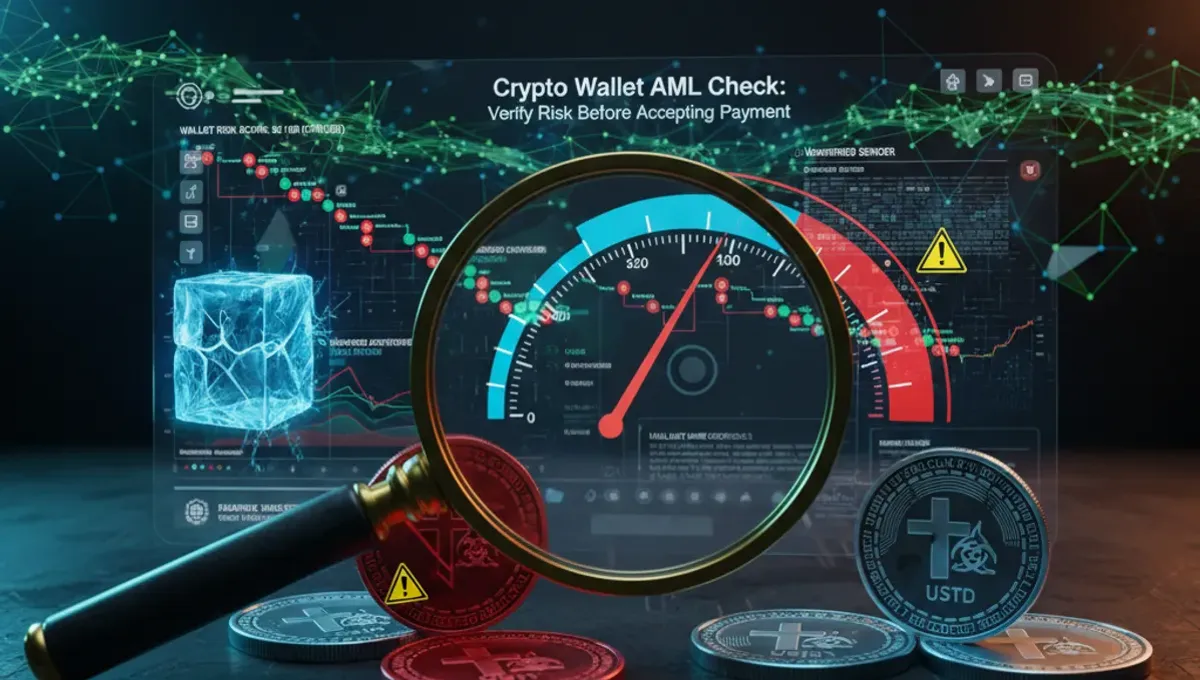
A crypto wallet AML check is a compliance scan that compares a blockchain address against known risk databases: darknet market wallets, theft reports, sanctions lists, and scam addresses. The check returns a risk score—typically ranging from low to critical—indicating the likelihood that funds are tainted or associated with illegal activity. AML (Anti-Money Laundering) screening protects you by flagging high-risk wallets before you receive their coins. Exchanges use these checks to prevent frozen accounts and regulatory penalties. A wallet screening service queries the address against multiple data sources and delivers results in seconds, showing transaction history patterns, associated entities, and risk categories.
How Does Crypto Wallet Risk Scoring Work?
Risk scores are calculated by analyzing an address's transaction history, cluster associations, and behavioral patterns. Factors include: whether the wallet has received funds from known darknet markets or theft addresses; whether it has interacted with gambling platforms or mixers; whether it appears on sanctions lists; and whether it shows signs of scam activity. Each interaction is weighted—direct darknet exposure carries higher risk than indirect exposure through multiple hops. The scoring algorithm produces a numerical or categorical rating (e.g., low, medium, high, critical). Different services may weight factors differently, so a wallet's score can vary slightly between providers. The key is that a risk score gives you actionable data: low-risk wallets are safe to accept; high-risk wallets warrant investigation or rejection.
Step-by-Step: How to Check a Crypto Wallet Before Accepting Payment
Follow these steps to perform a crypto wallet AML check:
- Obtain the sender's wallet address (e.g., a TRC20 USDT address, Bitcoin address, or Ethereum address).
- Copy the full address—ensure no typos or truncation.
- Visit a trusted crypto wallet screening service (check the verified AML services list on this site for options).
- Paste the address into the search field.
- Run the check—the service queries its risk database.
- Review the risk score and report: look for risk level, transaction history, associated entities, and specific risk categories (darknet, theft, sanctions, scam).
- Decide: accept the payment if risk is low; investigate further or reject if risk is high or critical.
- Document the check result for your compliance records.
Most checks complete in under 30 seconds. Some services offer batch checking for multiple addresses at once.
Understanding Crypto Wallet Risk Categories
Risk categories help you interpret what a wallet's score means:
- Darknet exposure: the wallet has received funds from known darknet market addresses or mixers.
- Theft: the address is linked to stolen cryptocurrency reported by victims or exchanges.
- Sanctions: the wallet appears on government sanctions lists (OFAC, EU, UN).
- Scam: the address is associated with known fraud schemes, Ponzi projects, or rug pulls.
- Gambling: the wallet has interacted with gambling platforms (not illegal but higher compliance scrutiny).
- Mixer usage: the address has sent or received funds through privacy mixers, indicating intent to obscure transaction trails.
A wallet can have multiple risk categories. For example, a wallet flagged for both darknet exposure and theft carries compounded risk. Low-risk wallets typically show clean transaction histories with no associations to these categories.
What to Do If a Wallet Is Flagged as High-Risk
If a crypto wallet screening reveals high or critical risk, take these steps:
- Do not accept the payment immediately. Pause the transaction.
- Review the detailed report: which risk categories apply? Is the risk recent or historical?
- Contact the sender: ask them to explain the flag. Some wallets accumulate risk through no fault of the holder (e.g., receiving coins from a compromised address).
- Assess context: if you trust the sender and the risk is indirect or outdated, you may proceed with caution.
- If risk is direct (theft, darknet, sanctions), reject the payment. Accepting tainted coins can trigger exchange account freezes or regulatory investigation.
- Document your decision and the screening result for compliance records.
Exchanges increasingly monitor incoming deposits; accepting flagged coins risks your account being frozen pending investigation. Prevention is cheaper than remediation.
How Exchanges Freeze Accounts Over Tainted Cryptocurrency
When you deposit high-risk or tainted cryptocurrency into an exchange, the exchange's compliance system flags the transaction. If the coins are linked to theft, sanctions, or darknet activity, the exchange may freeze your account pending investigation. During a freeze, you cannot withdraw funds, trade, or access your account. The exchange conducts AML checks on the incoming transaction and may request documentation proving the source of the funds. If you cannot prove legitimate ownership or if the coins are confirmed stolen, the exchange may permanently close your account and forfeit the balance. This process can take weeks or months. By screening wallets before accepting payment, you avoid this risk entirely. Exchanges use transaction monitoring and KYT (Know Your Transaction) services to detect tainted coins automatically.
Acceptable Risk Score Thresholds and Best Practices
Most compliance professionals recommend accepting only wallets with low-risk scores. Here are practical thresholds:
- Low risk: safe to accept. No known associations with darknet, theft, or sanctions.
- Medium risk: investigate further. May have indirect associations or historical flags. Acceptable if context is clear (e.g., the wallet received coins from a legitimate exchange).
- High risk: reject unless you have strong reason to trust the sender and can document it.
- Critical risk: reject outright. Direct associations with theft, sanctions, or active darknet activity.
Best practices: screen every wallet before accepting large payments; maintain records of all checks; use services from the verified AML provider list on this site; if unsure, ask the sender to send from a different, lower-risk address; educate your team on risk categories so they can make informed decisions.
Frequently asked questions
How long does a crypto wallet AML check take?
Most checks complete in under 30 seconds. The service queries its database and returns a risk score and report instantly. Batch checks for multiple addresses may take a few minutes depending on the service and volume.
Can I check a wallet for free?
Some services offer limited free checks per day or month; others charge per check or offer subscription plans. Visit the verified AML services list on this site to compare free and paid options. Free checks often provide basic risk scores; paid checks include detailed reports and historical data.
What if a wallet has a medium risk score?
Medium risk usually means indirect associations or historical flags. Review the detailed report to understand which risk categories apply. Contact the sender to ask for context. If the risk is old or indirect, you may accept the payment; if recent or direct, investigate further or request a different address.
Can I check USDT, BTC, and ETH addresses with the same tool?
Yes. Most AML screening services support multiple blockchains: Ethereum, Bitcoin, Tron (TRC20 USDT), and others. When you paste an address, the service automatically detects the blockchain and queries the appropriate database.
What happens if I accept payment from a sanctioned wallet?
Accepting funds from a sanctioned address violates AML regulations and can result in account freezes, legal penalties, and regulatory investigation. Exchanges monitor incoming deposits for sanctions exposure. Always screen wallets against sanctions lists before accepting payment.