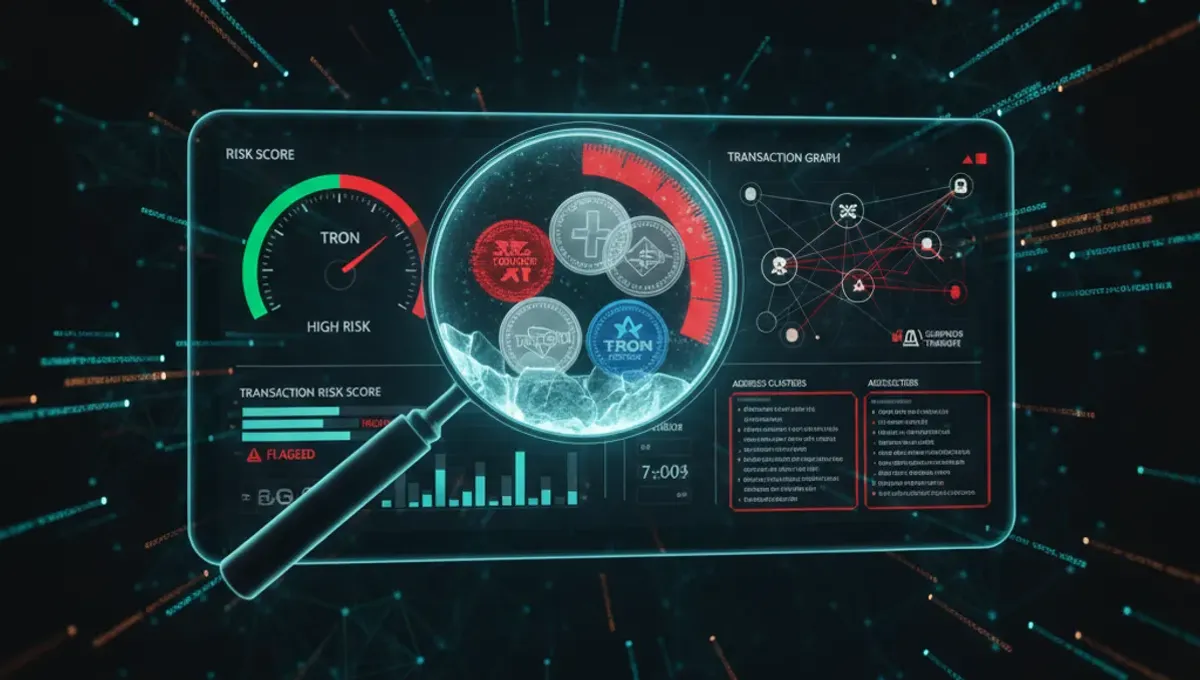
What Is an AML Crypto Wallet Check?
An AML crypto wallet check is a screening process that compares a blockchain address against known risk databases. These databases include darknet market wallets, ransomware proceeds, stolen funds, sanctioned entities, and scam-linked addresses. When you submit a wallet address, the screening tool returns a risk score and flags any matches. The check happens on-chain: it analyzes the transaction history and counterparties associated with that address to determine whether it has received or sent funds tied to illegal activity. Unlike KYC (Know Your Customer), which verifies identity, AML (Anti-Money Laundering) screening focuses on the wallet's behavior and transaction patterns. A free AML crypto check typically covers basic risk scoring, while paid services offer deeper blockchain analytics and real-time transaction monitoring.
Why You Need to Check a Wallet Before Accepting Crypto
Receiving tainted cryptocurrency can have serious consequences. Exchanges use transaction monitoring to detect and flag deposits linked to illicit sources. If you deposit coins flagged as dirty crypto, your exchange may freeze the funds pending investigation, delay withdrawals, or close your account. Stolen USDT, ransomware Bitcoin, or mixer-linked Ethereum can trigger automatic compliance holds. Even if you received the coins unknowingly, the exchange will not release them until the source is cleared. Checking a wallet before you accept payment lets you refuse high-risk transfers upfront. This is especially important for peer-to-peer trades, freelance payments, or any transaction where you do not know the sender's background. A quick AML check takes seconds and prevents weeks of frozen funds or account restrictions.
How to Check a Wallet: Step-by-Step Process
Follow these steps to perform an AML crypto wallet check:
- Obtain the wallet address from the sender and verify it matches what they claim to send from.
- Copy the full address (TRC20, ERC20, BTC, or other blockchain format).
- Visit a trusted AML screening service—our curated list of verified AML services on this site includes tools that offer free and paid wallet checks.
- Paste the address into the search field and select the blockchain network.
- Run the scan and wait for the risk assessment to complete (usually under one minute).
- Review the risk score, any flags, and the transaction history summary.
- If the score is low or acceptable, proceed with the transaction; if high, ask the sender for clarification or decline.
Most services display the risk score as a number or color-coded level (green, yellow, red). Some also show which specific risk categories triggered a flag—for example, mixer exposure, darknet links, or sanctions list matches.
Understanding Risk Scores and What They Mean
Risk scores typically range from 0 to 100 or are labeled as Low, Medium, High, and Critical. A score of 0–20 indicates minimal risk; the wallet has clean transaction history and no known associations with illicit activity. A score of 21–50 suggests moderate risk; the wallet may have received funds from mixers, gambling platforms, or other sources flagged for compliance review, but no direct darknet or stolen-fund links. A score of 51–80 indicates high risk; the wallet has received or sent funds tied to known scams, ransomware, or sanctioned entities. A score above 80 is critical; the wallet is directly linked to darknet markets, stolen funds, or active sanctions violations. Most exchanges accept wallets with scores below 30 without additional review. Scores between 30 and 50 may trigger manual review. Scores above 50 are typically rejected or frozen pending investigation. Your risk tolerance depends on your exchange's compliance policy and your jurisdiction.
What Happens If Your Wallet Is Flagged as High Risk
If a wallet check reveals a high risk score, you have several options. First, ask the sender to explain the flag—they may have received funds from a mixer or gambling site by accident. Second, request that they send the funds from a different wallet with a cleaner history. Third, decline the transaction and ask for an alternative payment method. If you have already received flagged coins, contact your exchange's compliance team immediately and provide the wallet address and AML check results. Explain that you received the funds unknowingly and request a manual review. Some exchanges will release the funds after investigation; others may require you to prove the source of the coins. Do not attempt to move or mix the coins further, as this may trigger additional compliance flags. Frozen USDT and exchange account bans are the most common consequences of depositing high-risk crypto without disclosure. Being proactive and checking wallets before accepting payment is far simpler than resolving a frozen account afterward.
Free vs. Paid AML Crypto Checks
Free AML crypto checks provide basic risk scoring and flag obvious matches against darknet and stolen-fund databases. They are suitable for one-off wallet verification before a single transaction. Free tools typically show a risk score and a brief summary of any flags, but do not include detailed transaction history, real-time monitoring, or API access. Paid AML check services offer deeper blockchain analytics, including full transaction graphs, counterparty analysis, and historical risk scoring. They also provide bulk-check capabilities, API integration for automated screening, and priority support. For individuals and small traders, a free AML check is usually sufficient. For businesses, exchanges, and high-volume traders, paid services offer compliance-grade reporting and audit trails. Our curated list of verified AML services on this site includes both free and paid options so you can choose the right tool for your needs. Start with a free check to screen a wallet quickly; upgrade to paid screening if you need detailed analytics or ongoing monitoring.
Common Risk Flags and What They Indicate
Several risk categories trigger AML flags during a crypto wallet check. Mixer exposure means the wallet has received or sent funds through a coin mixer or tumbler, which obscures transaction origins. Darknet market links indicate the wallet has transacted with known darknet marketplace addresses. Stolen funds flags show the wallet received cryptocurrency from a confirmed theft or hack. Ransomware proceeds indicate the wallet is linked to ransomware payments or extortion. Sanctions violations mean the wallet matches a sanctioned entity or geographic restriction list. Scam associations flag wallets linked to Ponzi schemes, rug pulls, or fraud. Gambling activity indicates the wallet has sent or received funds from gambling platforms (not illegal, but flagged for compliance review). Frozen USDT and exchange account bans most commonly result from stolen-funds or darknet flags. Mixer and gambling flags are lower-risk but still warrant caution. Understanding which flags apply to a wallet helps you decide whether to proceed with the transaction or request clarification from the sender.
Frequently asked questions
Is AML crypto check free?
Yes, many services offer free AML crypto checks with basic risk scoring and flag detection. Free tools are suitable for one-off wallet verification. Paid services provide deeper analytics, transaction history, and bulk-check capabilities. Start with a free check; upgrade if you need detailed compliance reporting.
Can I check a wallet on Telegram for free?
Some AML services offer Telegram bots that provide quick wallet checks. These typically return a risk score and basic flags without detailed analytics. Telegram bots are convenient for fast screening but may have limited database coverage. Use them for quick reference, then verify critical wallets through a full web-based AML check.
What risk score is acceptable for receiving crypto?
Most exchanges accept wallets with risk scores below 30 without additional review. Scores between 30 and 50 may trigger manual compliance review. Scores above 50 are typically rejected or frozen. Your exchange's policy and your risk tolerance determine the threshold. Always ask your exchange about their specific risk score requirements.
What does it mean if a wallet is flagged for mixer exposure?
Mixer exposure means the wallet has received or sent funds through a coin mixer, which obscures transaction origins. This is a compliance flag but not necessarily illegal. Mixers are used for privacy, but also to launder funds. Most exchanges review mixer-flagged wallets manually. Ask the sender why they used a mixer before accepting the payment.
What should I do if I already received tainted crypto?
Contact your exchange's compliance team immediately and provide the wallet address and AML check results. Explain that you received the funds unknowingly. Do not move or mix the coins further. Some exchanges will release the funds after investigation; others may require proof of the source. Transparency and quick disclosure improve your chances of resolution.