What Is an AML Check for TRON Wallets?
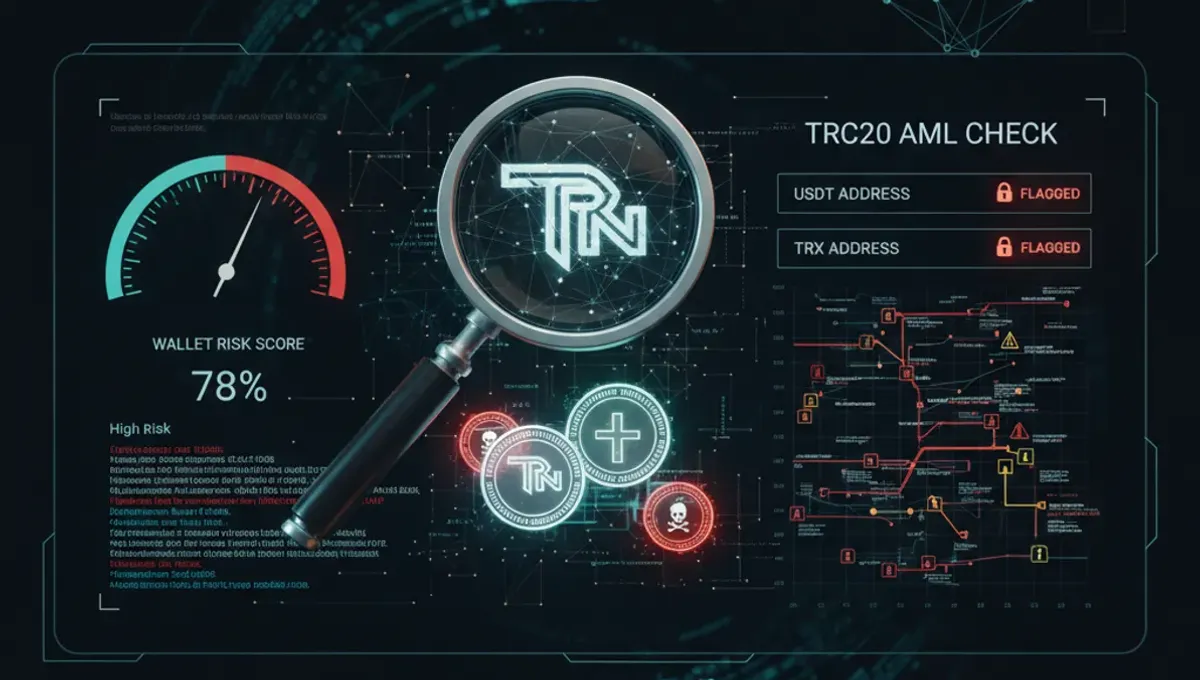
An AML check on a TRON address analyzes the wallet's transaction history and source of funds against multiple risk databases. The check flags exposure to known darknet markets, mixing services, stolen cryptocurrency, and sanctioned entities. TRON-based assets like USDT (TRC20) are frequently checked because they move through high-volume exchanges where compliance is strict. When you receive TRX or USDT from an unknown address, an AML check reveals whether those coins carry regulatory risk. The result is a risk score—typically ranging from low (clean) to high (flagged)—that tells you whether accepting the payment could trigger account freezes or compliance alerts at your exchange.
How Does the AML Check Process Work for TRX?
The AML check process follows these steps:
- Enter the TRON wallet address (starting with T) into an AML screening tool.
- The tool queries blockchain analytics databases that track transaction patterns and known risk entities.
- The system cross-references the address against darknet market wallets, mixer outputs, stolen fund registries, and sanctions lists.
- A risk score is generated based on the number and severity of matches.
- A detailed report shows which risk categories apply: darknet exposure, scam association, stolen funds, gambling, or sanctions.
The entire process typically completes in seconds to minutes. Most AML check services store no personal data and do not require account creation for a single lookup. The report is yours to download and keep as evidence of due diligence.
What Do AML Risk Score Levels Mean?
Risk scores vary by service but generally follow this pattern:
- Low (0–20%): Address shows minimal or no exposure to known risk sources. Safe to accept.
- Medium (21–50%): Address has some transaction history with flagged entities or mixing services, but not direct darknet or stolen fund links. Acceptable for most use cases; monitor further transactions.
- High (51–100%): Address is directly linked to darknet markets, stolen funds, sanctions lists, or active scams. Reject the payment to avoid exchange account restrictions.
Exchanges typically freeze accounts or flag transactions when high-risk USDT or TRX arrives. Even medium-risk coins can trigger compliance reviews that delay withdrawals. The AML check fee is usually a one-time cost of a few dollars per lookup, far cheaper than account freezes or regulatory fines.
How to Check a TRON Address Before Accepting Payment
Follow these steps to screen a TRX or USDT address:
- Copy the TRON wallet address (it starts with T and is 34 characters long).
- Visit a trusted AML check service—our curated AML Services list on this site includes verified providers that specialize in TRON screening.
- Paste the address into the search field.
- Wait for the report to generate (usually under 2 minutes).
- Review the risk score and category breakdown.
- If the score is low or acceptable, proceed with the transaction.
- If the score is high, decline the payment or request funds from a different address.
Always download and save the report as proof of your due diligence. If a dispute arises later, the report shows you screened the address before accepting it. Many AML check services also offer batch uploads for checking multiple addresses at once, useful if you receive frequent TRON payments.
What AML Check Requirements Apply to TRON Exchanges?
Exchanges that accept TRON deposits are required by law in most jurisdictions to screen incoming funds for sanctions compliance and money laundering risk. This is part of Know Your Transaction (KYT) and Know Your Customer (KYC) obligations. When you deposit USDT or TRX into an exchange, the platform runs its own AML checks. If your deposit comes from a flagged address, the exchange may freeze your account pending investigation. By running an AML check before sending or receiving TRON payments, you reduce the risk of triggering these automatic blocks. Some exchanges publish their AML check requirements in their compliance policies; others do not disclose their thresholds. Running your own independent AML check gives you control and visibility before funds reach the exchange.
What Happens If Your TRON Wallet Is Flagged as High Risk?
If an AML check flags your TRON address as high risk, several outcomes are possible:
- Exchanges may freeze deposits or withdrawals pending manual review.
- Your account may be restricted or closed without warning.
- Funds may be held for 30–90 days during compliance investigation.
- In severe cases (direct sanctions or stolen fund links), assets may be permanently seized.
If you receive a high-risk flag, contact the exchange's compliance team immediately with documentation of your transaction source. Explain the legitimate reason for the flagged activity. However, if the flag is accurate (you did receive stolen or sanctioned funds), you cannot reverse it. The best defense is screening addresses before accepting payments. If you accidentally receive high-risk TRON, do not attempt to move it quickly—that triggers more alerts. Instead, report it to your exchange and cooperate with their investigation.
Comparing AML Check Services for TRON Screening
When choosing an AML check service for TRON addresses, consider these factors:
- Database coverage: Does the service track TRON-specific darknet markets and mixers?
- Speed: How fast is the report generated?
- Cost: Is there a per-check fee, or a subscription model?
- Report detail: Does it show which risk categories apply (darknet, scams, stolen funds, etc.)?
- Accuracy: Are false positives common, or is the risk scoring reliable?
Our AML Services page lists verified providers that specialize in TRON and USDT screening. Each has been tested for accuracy and speed. Start with the trusted services listed there rather than using unknown tools, which may have outdated databases or inaccurate risk scoring. A reliable AML check service is worth the small fee because it protects your exchange account and compliance record.
Frequently asked questions
How much does an AML check on a TRON address cost?
Most AML check services charge between $2 and $10 per single address lookup. Some offer subscription plans for bulk checking at lower per-address rates. The fee is a one-time cost per address and is far cheaper than dealing with frozen exchange accounts or compliance fines.
Can I check a TRON address for free?
Some AML services offer limited free checks (1–3 per month) with basic risk scoring. Full reports with detailed category breakdowns typically require payment. For regular TRON screening, a paid service is more reliable and faster than free tools.
What does it mean if a TRON address has darknet exposure?
Darknet exposure means the address has received or sent funds to known darknet market wallets. This is a high-risk flag because darknet markets are associated with illegal goods and services. Exchanges will likely freeze accounts that receive darknet-linked TRON or USDT.
How long does an AML check on TRON take?
Most AML checks complete in 30 seconds to 2 minutes. The speed depends on the service's database size and server load. Batch checks for multiple addresses may take longer but are faster per address than individual lookups.
What should I do if I receive TRON from a flagged address?
Do not move the funds immediately, as that triggers more compliance alerts. Contact your exchange's compliance team and explain the source. If the flag is accurate, the funds may be seized. If it is a false positive, provide evidence and request manual review.