What Is a TRC20 AML Check and Why It Matters
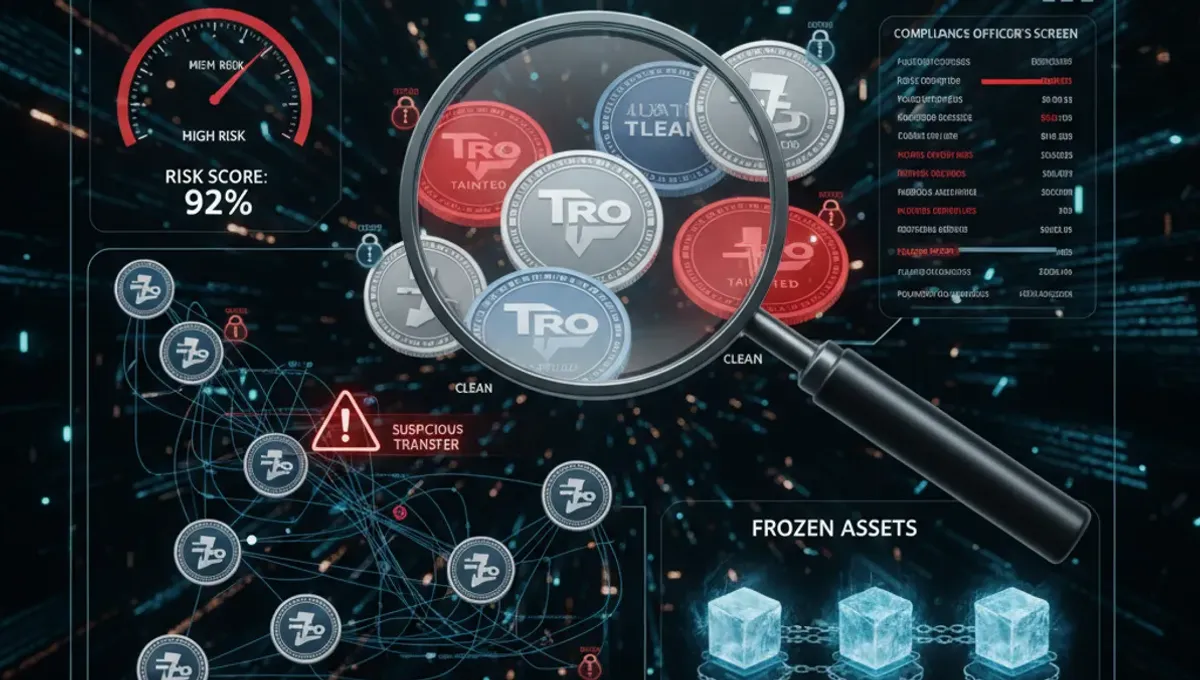
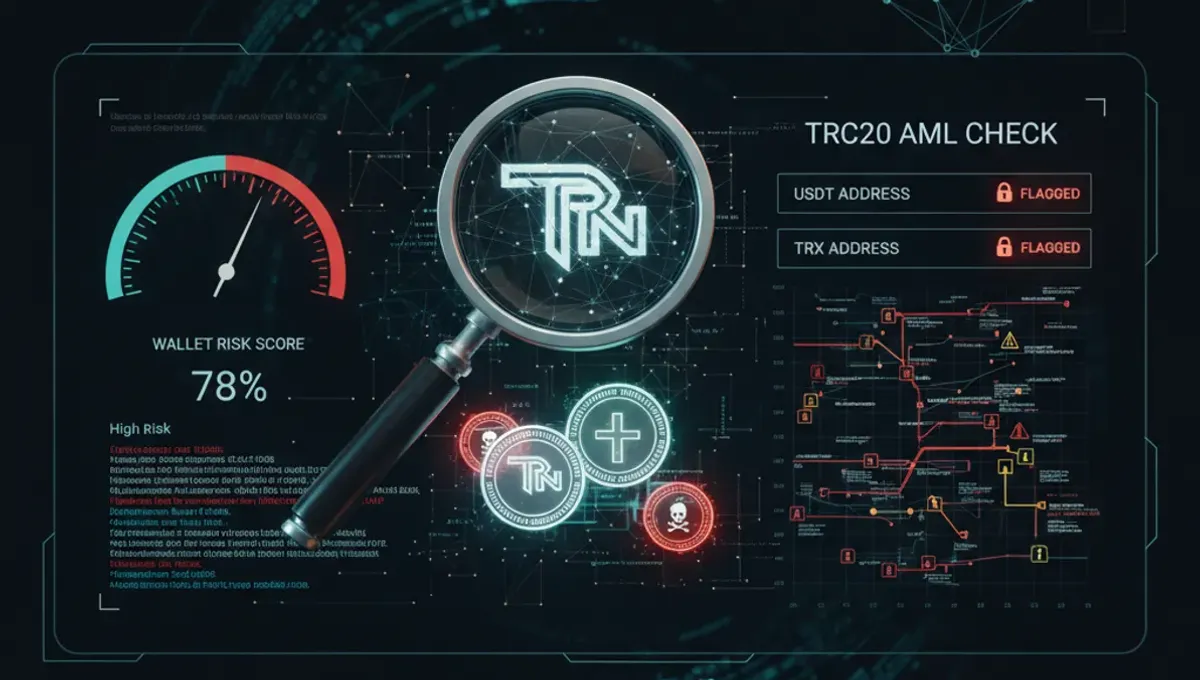
TRC20 is the token standard for assets issued on the Tron blockchain, most commonly USDT (Tether). An AML check on a TRC20 address examines the transaction history and source of funds to detect exposure to high-risk activity. Exchanges and custodians freeze accounts when they receive tainted coins—funds linked to theft, ransomware, darknet markets, or sanctioned entities. A TRC20 AML check requirements typically include verifying the wallet's transaction history against known risk databases. By screening addresses before you accept payment, you avoid receiving flagged coins that could lock your account or trigger regulatory investigation. The AML check process takes seconds and costs little to nothing through most compliance platforms.
How TRC20 AML Check Scoring Works
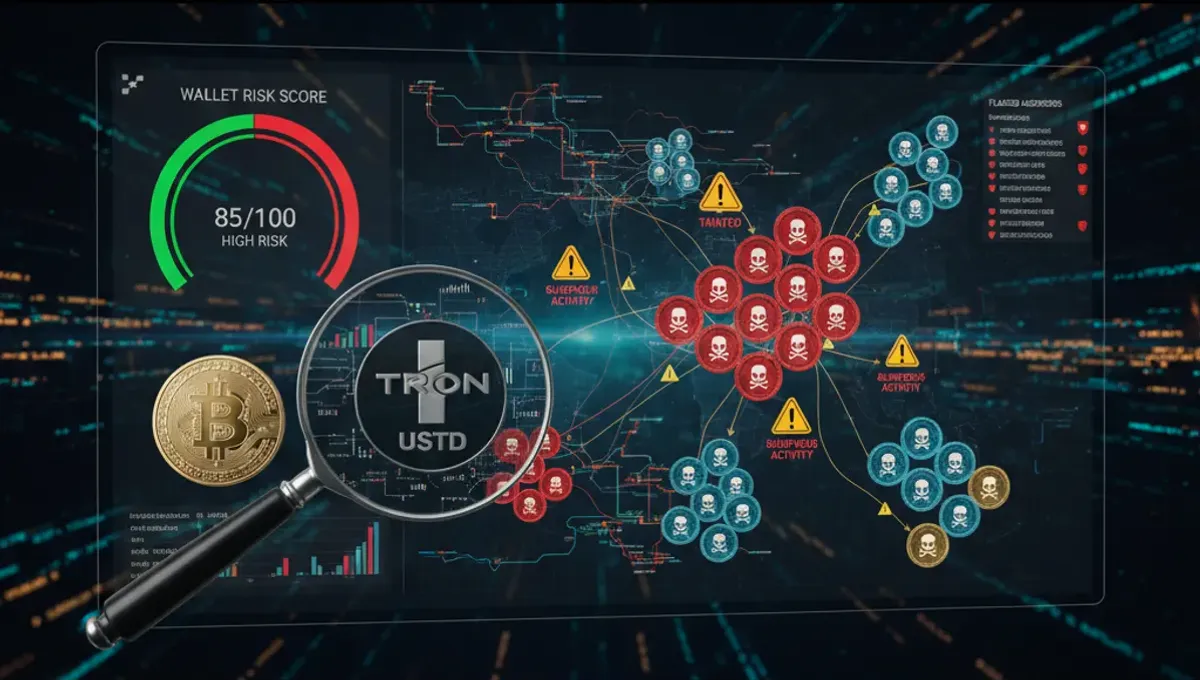
An AML check crypto scoring system assigns a risk level to each address based on its transaction history. Most platforms use a scale from 0 (clean) to 100 (high risk). The scoring factors include:
- Mixer exposure: funds routed through privacy mixers or tumblers
- Darknet market links: transactions tied to known illegal marketplaces
- Stolen funds: coins traced to exchange hacks or wallet theft
- Sanctions lists: addresses controlled by sanctioned jurisdictions or entities
- Scam history: funds from known Ponzi schemes or fraud operations
- Gambling platforms: some jurisdictions flag gambling-linked funds
A risk score above 50 typically signals moderate to high concern. Scores above 75 are usually flagged for manual review or rejection by exchanges. The AML check fee varies by service; many offer free basic checks with paid premium reports that include detailed transaction tracing.
Step-by-Step: How to Check a TRC20 Address
Follow these steps to perform a TRC20 AML check before accepting USDT or TRX:
- Obtain the sender's full Tron address (starts with T).
- Visit a verified AML screening service listed on our curated AML Services page.
- Paste the address into the search field.
- Review the risk score and transaction summary.
- Check the detailed report for mixer exposure, darknet links, or sanctions flags.
- Decide: accept if the score is below your threshold (typically 30–40), request clarification if moderate risk, or reject if high risk.
Most checks complete in under 10 seconds. Premium reports show the full transaction chain, source of funds, and specific risk categories. If you receive a moderate-risk address, ask the sender for proof of legitimate origin or request they send from a cleaner wallet. Document your decision for compliance records.
Understanding TRC20 Risk Score Thresholds
Risk score interpretation depends on your compliance posture and business model:
- Score 0–20: Clean. Safe to accept in most contexts.
- Score 21–40: Low to moderate risk. Acceptable for most retail and peer-to-peer transactions; document the decision.
- Score 41–60: Moderate to high risk. Requires manual review; consider requesting additional KYC or proof of funds origin.
- Score 61–100: High risk. Most exchanges reject automatically. Do not accept without legal review.
Your acceptable threshold depends on your jurisdiction and regulatory requirements. Retail traders often accept scores up to 40; institutional buyers typically reject anything above 30. If you operate an exchange or custody service, set a formal policy and log all decisions. Regulators expect you to demonstrate that you screened incoming funds and made informed decisions.
What Happens When TRC20 Coins Are Flagged as Dirty
If you receive flagged USDT or TRX and deposit it into an exchange, several outcomes are possible:
- Automatic freeze: the exchange detects the tainted coins and locks your account pending investigation.
- Delayed freeze: your account functions normally until the exchange's compliance team flags the deposit, which can take days or weeks.
- Forced withdrawal: the exchange may require you to move the coins to an external wallet, effectively blocking you from trading.
- Account closure: serious cases (sanctions exposure, stolen funds) result in permanent account termination.
Once frozen, recovering access is difficult and time-consuming. You may need to provide proof that you unknowingly received the coins and did not knowingly facilitate money laundering. Prevention through TRC20 AML checks is far simpler than remediation. If you do receive flagged coins, do not deposit them into regulated exchanges; consult a compliance attorney instead.
TRC20 AML Check vs. Other Screening Methods
Several approaches exist for screening Tron addresses:
- Full AML check: queries darknet, mixer, theft, and sanctions databases; provides a risk score and detailed report. Cost: free to $10 per check. Time: seconds.
- Manual blockchain review: you examine the address's transaction history on Tronscan (the Tron block explorer) yourself. Cost: free. Time: 10–30 minutes; requires expertise.
- KYT (Know Your Transaction) monitoring: continuous transaction monitoring for ongoing compliance. Cost: $50–500 per month. Best for exchanges and custodians.
- KYC (Know Your Customer) verification: collects identity documents from the sender. Cost: varies. Time: hours to days. Most thorough but slowest.
For most users, a quick TRC20 AML check through a verified service strikes the best balance of speed, cost, and reliability. Start with our curated list of AML Services to find a platform that fits your needs.
How to Avoid Receiving Tainted TRC20 Coins
Proactive steps reduce the risk of receiving flagged USDT or TRX:
- Screen before accepting: always run an AML check on the sender's address before finalizing a transaction.
- Request proof of origin: ask senders where the funds came from, especially for large amounts.
- Use reputable sources: trade with established exchanges, known merchants, or verified peers.
- Avoid mixing services: do not accept coins from addresses that have interacted with privacy mixers or tumblers.
- Check for darknet exposure: reject addresses with recent transactions to known darknet markets.
- Document decisions: keep records of all AML checks and your acceptance or rejection rationale.
- Set a personal threshold: decide in advance what risk score you will tolerate (typically 20–40 for retail users).
If you operate a business that regularly receives crypto, implement a formal AML check policy and train staff to follow it consistently. Regulators expect documented compliance efforts.
Frequently asked questions
What does AML check mean for crypto wallets?
An AML check verifies whether a crypto wallet has been linked to illegal activity such as theft, darknet markets, sanctions violations, or scams. It assigns a risk score based on transaction history. The check protects you from receiving flagged coins that could freeze your exchange account.
How much does a TRC20 AML check cost?
Most AML check services offer free basic screening for a single address. Premium detailed reports typically cost $5–$10 per check. Some platforms charge monthly subscriptions ($50–$500) for continuous transaction monitoring. Compare options on our AML Services page to find pricing that suits your needs.
Can I check a TRC20 address for free?
Yes. Many verified AML screening services provide free basic checks that return a risk score and summary flags. Free checks are sufficient for most retail users. Paid premium reports offer deeper transaction tracing and detailed risk analysis, useful for institutional buyers or high-value transactions.
What risk score should I accept for TRC20 USDT?
Most retail users accept scores below 30–40. Scores above 60 are typically rejected by exchanges. Your threshold depends on your compliance requirements and risk tolerance. Document your decision-making process. If unsure, consult our AML Services page for platforms that help you set and enforce a consistent policy.
What happens if I deposit flagged TRC20 coins into an exchange?
Exchanges may freeze your account, require you to move the coins out, or close your account entirely. Recovery is difficult and time-consuming. Prevention through AML checks before accepting payment is far simpler than dealing with a frozen account. Always screen addresses first.