What Is KYT in Crypto and How Does It Differ from KYC?
KYT (Know Your Transaction) and KYC (Know Your Customer) are complementary but distinct compliance tools. KYC verifies the identity of the person sending or receiving funds—collecting documents, checking against sanctions lists, and confirming they are who they claim to be. KYT, by contrast, examines the transaction itself: where the funds came from, whether they passed through mixers or darknet markets, and whether they are flagged as stolen or linked to scams. In practice, exchanges and payment processors use both. KYC happens once during account setup; KYT happens continuously as transactions flow through the blockchain. A wallet may pass KYC screening but still receive tainted coins, which KYT monitoring would catch. Together, they form a complete AML (Anti-Money Laundering) framework that protects your account from regulatory action and fund seizure.
How Does KYT Blockchain Monitoring Work?
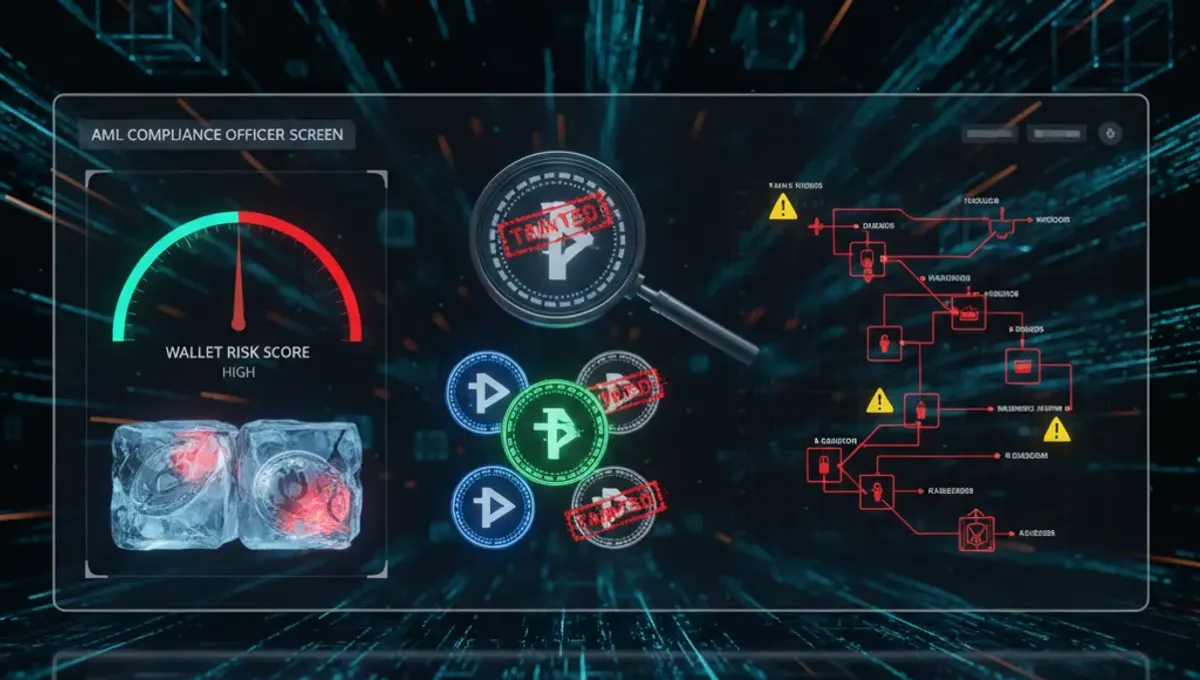
KYT systems use blockchain analytics to trace transaction history on public ledgers like Bitcoin, Ethereum, and Tron. The process works in stages. First, the system records every on-chain transaction and wallet address involved. Second, it cross-references those addresses against known risk databases: darknet market wallets, stolen fund lists, sanctioned entity addresses, and mixer services. Third, it assigns a risk score based on transaction patterns—frequency of transfers, time between transactions, and proximity to high-risk addresses. When you receive crypto, KYT screening checks whether the sending wallet has touched any flagged sources. If a wallet received coins from a mixer or a known scam address, that transaction history remains visible on the blockchain forever. This immutability is what makes KYT effective: you cannot hide transaction origins. The result is a risk assessment that exchanges use to decide whether to accept, hold, or freeze the deposit.
What Risk Categories Does KYT Detect?
KYT systems flag transactions linked to several risk categories. Darknet markets are the most visible: wallets known to have received funds from illegal marketplaces trigger immediate alerts. Stolen funds appear when coins are traced back to exchange hacks or wallet compromises; receiving stolen crypto can result in your account being frozen and funds returned to the original owner. Mixers and tumblers are services designed to obscure transaction history; coins passing through them are flagged as high-risk because the intent is to hide origin. Scam proceeds include funds from rug pulls, Ponzi schemes, and phishing attacks. Sanctioned entities are individuals or organizations on government blacklists; transacting with them violates international law. Gambling and high-frequency trading patterns can also trigger alerts depending on the exchange's risk tolerance. Each category carries different regulatory weight: stolen funds are the highest priority for law enforcement, while gambling activity may only trigger internal review.
How to Check a Crypto Address Before Accepting Payment
Before you accept USDT, TRX, BTC, or ETH from an unknown source, run an AML check on the sending wallet. Here is the practical process: First, obtain the wallet address from the sender. Second, visit a trusted AML screening service—our curated list of verified AML services on this site includes tools that perform real-time KYT checks. Third, paste the address and select the blockchain (Tron for TRX, Ethereum for ETH, etc.). Fourth, wait for the risk score result, typically displayed as low, medium, or high. A low-risk score means the wallet has clean transaction history. A medium-risk score warrants caution—review the specific flags before accepting. A high-risk score means the wallet is linked to known darknet, stolen funds, or sanctioned activity; reject the payment. This check takes seconds and costs nothing on many platforms. For recurring payments or large amounts, use continuous monitoring so you are alerted if a wallet's risk status changes after the initial check.
What Do Crypto Risk Score Levels Mean?
Risk scores are numerical or categorical ratings that summarize a wallet's transaction history. Most systems use a scale from 0 to 100 or categories like low, medium, high, and critical. A score of 0–20 (low risk) indicates the wallet has clean transaction history with no known exposure to darknet, stolen funds, or sanctioned entities. A score of 21–50 (medium risk) suggests some exposure to high-risk services or patterns—for example, the wallet may have received coins from a mixer, or it shows rapid trading activity. A score of 51–80 (high risk) means the wallet has direct or recent links to flagged sources. A score of 81–100 (critical risk) indicates the wallet is actively involved in or directly connected to illegal activity, stolen funds, or sanctions violations. Exchanges typically reject deposits from critical-risk wallets and may freeze accounts that repeatedly receive medium or high-risk funds. The threshold your exchange accepts depends on its compliance policy; some are strict (reject anything above low), while others tolerate medium-risk transactions. Always check your exchange's policy before accepting payments.
What Happens If You Receive Tainted or Stolen Crypto?
If you receive stolen crypto or coins flagged as tainted, several outcomes are possible depending on where you deposit them. If you deposit into an exchange, the exchange's AML monitoring will flag the transaction during deposit screening. The exchange may freeze your account pending investigation, hold the funds in escrow, or reject the deposit outright. If the coins are confirmed as stolen, the exchange may be required by law enforcement to return them to the original owner, and your account may be permanently banned. If you hold the coins in a personal wallet, they remain in your possession, but you cannot easily convert them to fiat currency without triggering AML alerts at an exchange. Some users attempt to launder tainted coins through mixers, but this is illegal in most jurisdictions and leaves a detectable trace on the blockchain. The safest approach is to reject payments from high-risk wallets before accepting them. If you have already received tainted funds, consult a compliance specialist or legal advisor before attempting to move or exchange them.
Why Exchanges Freeze Accounts and How to Avoid It
Exchanges freeze accounts to comply with anti-money laundering regulations and to protect themselves from regulatory penalties. When an exchange detects that you have received stolen funds, funds from sanctioned entities, or coins linked to darknet activity, it must investigate and potentially report the transaction to financial authorities. During investigation, your account is locked, and you cannot withdraw or trade. If the investigation confirms the funds are tainted, the exchange may seize them, ban your account, and report you to compliance authorities. Even if you are not personally at fault—for example, if someone sent you stolen coins without your knowledge—you can still face account restrictions. To avoid this, always verify the source of incoming crypto before accepting it. Use KYT screening on the sending wallet, ask the sender for proof of legitimate origin, and reject payments from unknown or suspicious sources. If you run a business that receives crypto payments, integrate continuous KYT monitoring so you are alerted to high-risk deposits in real time. Our verified AML services on this site include tools designed for this purpose.
Frequently asked questions
Is KYT the same as KYC in crypto?
No. KYC (Know Your Customer) verifies user identity; KYT (Know Your Transaction) monitors transaction history and fund origin. KYC happens once during account setup. KYT happens continuously as transactions flow. Both are required for full AML compliance.
What happens if I receive crypto from a wallet flagged by KYT?
If the wallet is high-risk, your exchange may freeze your account during investigation. If the coins are stolen or linked to darknet activity, the exchange may seize them and ban your account. Always check wallet risk before accepting payment.
Can I check a wallet's KYT risk score for free?
Yes. Many AML screening services offer free basic checks. Visit our curated list of verified AML services to find tools that provide real-time KYT risk scoring. Some services charge for detailed reports or continuous monitoring.
What risk score should I accept for incoming crypto?
Most exchanges accept low-risk scores (0–20) without issue. Medium-risk (21–50) may trigger review. High-risk (51–80) and critical (81–100) are typically rejected. Check your exchange's specific policy before accepting payments.
Does KYT work on all blockchains?
KYT works on public blockchains like Bitcoin, Ethereum, and Tron where transaction history is transparent. It does not work on private blockchains or coins designed for anonymity. Most major exchanges use KYT for BTC, ETH, USDT, and TRX.