What Is an AML Check and Why It Matters
An AML (Anti-Money Laundering) check is a screening process that examines a crypto wallet's transaction history and associations to detect illicit activity. When you receive cryptocurrency, that coin carries a history on the blockchain. If it was previously stolen, used on a darknet market, or linked to a sanctioned entity, exchanges and regulators may flag or freeze your account.
AML checks matter because exchanges are legally required to perform Know Your Customer (KYC) and transaction monitoring under financial regulations. If you deposit coins flagged as dirty, your exchange may lock your funds pending investigation, or close your account entirely. By checking a wallet before accepting payment, you reduce the risk of receiving tainted crypto and protect your compliance standing.
How AML Scoring and Risk Assessment Work
AML checks assign a risk score to a wallet based on several factors. The scoring system evaluates whether the address has interacted with known illicit services, stolen-funds wallets, or sanctioned entities. Each blockchain analytics provider uses proprietary algorithms, but the core logic is consistent: trace the coin's movement history and flag high-risk patterns.
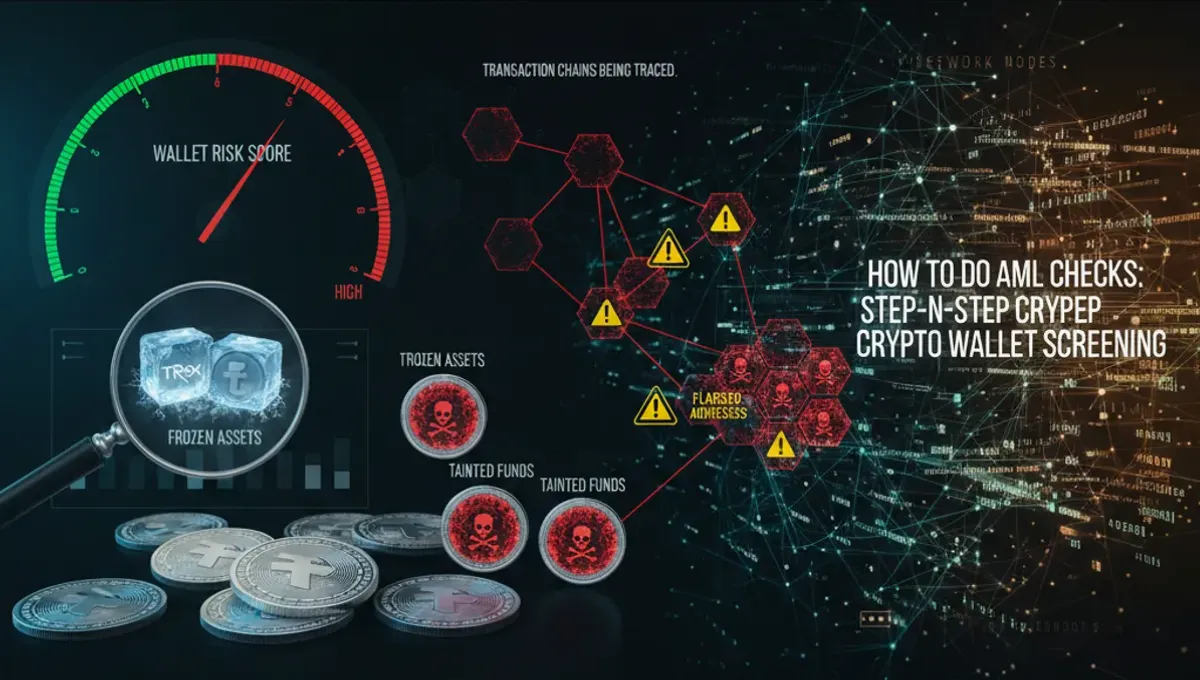
Risk scores typically range from low (clean, minimal exposure) to high (direct links to theft, darknet, or sanctions). A wallet that received coins from a mixer service or a known scam address will score higher than one with only peer-to-peer transfers. The score reflects the likelihood that an exchange or regulator will scrutinize or block the transaction. Understanding your risk score threshold—what level your exchange accepts—is essential before receiving large amounts.
Step-by-Step: How to Do AML Checks on a Crypto Address
To perform an AML check on a wallet address, follow these steps:
- Obtain the wallet address you want to verify (TRX, USDT, BTC, ETH, or other assets).
- Visit a trusted AML screening service (our curated AML Services list includes verified providers).
- Paste the address into the checker tool.
- Review the risk score and detailed report, which typically shows transaction history, associated entities, and flagged activities.
- Check for specific risk categories: mixer usage, darknet exposure, stolen funds, sanctions links, or gambling platform connections.
- Decide whether the risk level is acceptable for your exchange or business rules.
Most AML checks return results within seconds. The report will indicate if the address has received coins from high-risk sources or has direct involvement with illicit services. Use this information to decide whether to accept the payment or request an alternative wallet.
What Risk Categories Do AML Checks Detect
AML checks screen for several specific risk categories that regulators and exchanges monitor:
- Mixers and Tumblers: Services designed to obscure coin origin by combining and redistributing funds.
- Darknet Markets: Wallets associated with illegal marketplaces.
- Stolen Funds: Coins traced back to theft or hacking incidents.
- Sanctions Lists: Addresses linked to sanctioned individuals, entities, or countries.
- Scams and Fraud: Wallets involved in Ponzi schemes, rug pulls, or other fraudulent activity.
- Gambling Platforms: Some exchanges flag gambling exposure as higher risk depending on jurisdiction.
Each category carries different regulatory weight. Stolen funds and sanctions exposure are the most serious; mixing activity is flagged but may be acceptable depending on your exchange's policy. The AML check report will specify which categories apply to the address you're screening.
How AML Check Fees and Costs Work
AML check pricing varies by provider and usage volume. Some services offer a limited number of free checks per month, while others charge per scan. Understanding AML check costs helps you budget for compliance screening.
Free or low-cost options typically allow 1–5 checks monthly and provide basic risk scoring. Paid tiers unlock unlimited checks, detailed transaction reports, and API access for automated screening. Enterprise plans include transaction monitoring, batch processing, and dedicated support.
When evaluating AML check fees, consider your volume: occasional wallet verification may fit a free tier, while regular business transactions justify a paid subscription. Our AML Services page compares verified providers and their pricing models, helping you find the right balance between cost and coverage for your needs.
What Happens When a Wallet Is Flagged as High-Risk
If an AML check flags a wallet as high-risk, you have several options:
- Reject the Payment: Request the sender use a different, clean wallet. This is the safest approach if the risk score is very high.
- Request Clarification: Ask the sender about the wallet's history. Legitimate users can sometimes explain legitimate reasons for flagged activity.
- Accept with Caution: If the risk is moderate and acceptable under your exchange's policy, you may proceed but monitor the transaction closely.
- Report to Your Exchange: Inform your exchange before depositing flagged coins; transparency reduces the chance of account freeze.
Exchanges may freeze or reject deposits from high-risk wallets automatically. If you deposit flagged coins without disclosure, your account may be locked pending investigation, and funds could remain frozen for weeks or months. The safest practice is to verify addresses before accepting payment and only receive coins that pass your risk threshold.
Best Practices for Avoiding Tainted Crypto
To protect yourself from receiving dirty crypto and maintain compliance:
- Always Check Before Accepting: Use an AML check service on any wallet sending you significant amounts.
- Know Your Exchange's Policy: Confirm what risk score level your exchange accepts; thresholds vary.
- Request Clean Wallets: If a sender's address is flagged, ask them to use a different wallet or explain the history.
- Document Your Screening: Keep records of AML checks performed; this demonstrates due diligence if regulators inquire.
- Use Verified Services: Screen addresses through trusted AML providers listed on our AML Services page rather than unverified tools.
- Monitor Ongoing Activity: If you receive coins regularly, periodically re-check wallet sources to catch emerging risk.
These practices reduce the likelihood of frozen funds, account closure, or regulatory penalties. Compliance is an ongoing process, not a one-time check.
Frequently asked questions
How long does an AML check take?
Most AML checks return results within seconds to a few minutes. The screening service queries its databases of known illicit wallets and sanctions lists in real time. Some detailed reports may take a few minutes longer, but instant results are standard for basic risk scoring.
Can I do a free AML check on a crypto address?
Yes, many AML screening services offer free checks with limits—typically 1–5 scans per month. Free tiers provide basic risk scoring and category flagging. For unlimited checks or detailed reports, paid subscriptions are required. Check our AML Services page for verified providers offering free trials.
What does a high AML risk score mean for my exchange account?
A high risk score indicates the wallet has links to illicit activity, theft, sanctions, or mixers. If you deposit coins from a high-risk address, your exchange may freeze the funds pending investigation or close your account. Always verify addresses before depositing to avoid compliance violations.
Do all exchanges accept the same AML risk thresholds?
No, exchanges set their own risk policies. Some accept moderate risk, others only allow low-risk addresses. Before receiving crypto, confirm your exchange's acceptable risk level. This prevents deposits from being rejected or flagged after the fact.
How do AML checks detect stolen crypto?
AML checks compare wallet addresses against databases of reported theft incidents and hacking cases. When coins are stolen, victims or security researchers report the wallet addresses. Blockchain analytics providers track these addresses and flag any wallet that has received coins from them, creating a chain of tainted funds.