What Are the Main Types of Sanctions Screening?
Sanctions screening falls into several distinct categories, each targeting different risk vectors. OFAC sanctions screening checks whether a wallet address appears on the U.S. Treasury's Office of Foreign Assets Control list of blocked individuals and entities. Stolen-funds screening identifies coins traced to exchange hacks, wallet compromises, or theft. Mixer screening detects whether funds have passed through coin mixers or tumblers designed to obscure transaction history. Darknet screening flags wallets connected to known darknet marketplaces like former Silk Road infrastructure. Scam screening identifies addresses associated with Ponzi schemes, rug pulls, and fraud. Sanctions screening requirements vary by jurisdiction, but most regulated exchanges and custodians perform at least OFAC checks and stolen-funds verification as baseline compliance.
OFAC Sanctions Screening Requirements for Crypto
OFAC sanctions screening requirements apply to any U.S.-regulated entity handling crypto, including exchanges, custodians, and payment processors. The requirement is to screen wallet addresses, transaction parties, and beneficial owners against the Specially Designated Nationals (SDN) list and other OFAC lists before processing transactions. If a wallet matches an OFAC designation, the transaction must be blocked and the activity reported. OFAC screening is not optional for regulated entities; it is a legal compliance obligation. The screening must be performed at transaction initiation and, in many cases, continuously monitored. Failure to screen can result in civil penalties, criminal liability, and loss of banking relationships. For individual traders and non-regulated users, OFAC screening is voluntary but strongly recommended to avoid receiving sanctioned funds that could trigger exchange account freezes or legal complications.
How Crypto Wallet Screening Works in Practice
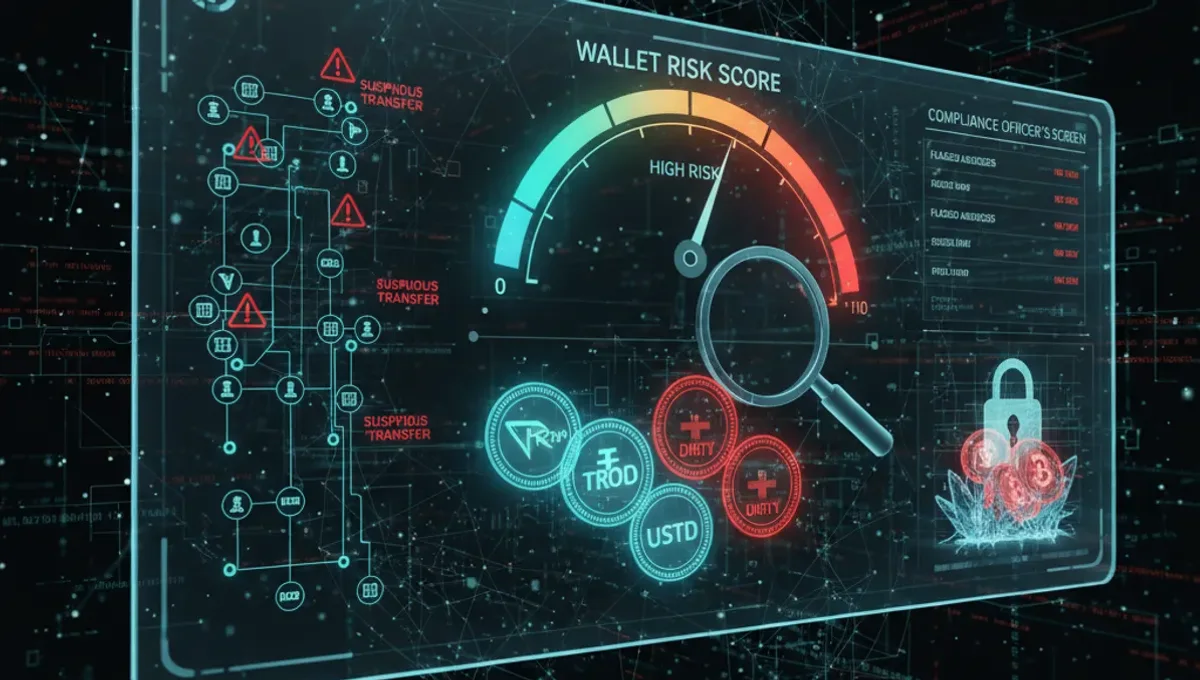
Crypto wallet screening uses blockchain analytics to trace transaction history and cross-reference wallet addresses against multiple risk databases. The process begins with address lookup: a screening service receives a wallet address (TRC20, ERC20, or native chain) and queries its transaction graph. The service then checks the address and all connected wallets against OFAC lists, stolen-coin registries, mixer databases, and darknet market records. Screening tools assign a risk score based on the number and severity of matches. A wallet with no matches receives a low risk score; a wallet with multiple connections to mixers or darknet addresses receives a high score. Fake crypto wallet screening is also performed to detect counterfeit token addresses or phishing wallets designed to steal funds. Most screening happens in seconds, returning a risk assessment and detailed findings so you can decide whether to accept the payment.
Risk Categories and What They Mean
Sanctions screening results are typically categorized into risk levels: low, medium, high, and critical. Low risk means the wallet has minimal or no connection to known illicit activity, stolen funds, or sanctions lists. Medium risk indicates some exposure—for example, the wallet has received funds from a mixer or has minor darknet connections but no direct theft or sanctions match. High risk means the wallet has direct connections to stolen coins, multiple mixer interactions, or significant darknet exposure. Critical risk indicates a direct OFAC match, confirmed stolen funds, or active involvement with known scam or ransomware operations. When assessing whether to accept a payment, most exchanges and traders set a threshold: accepting low and medium risk, rejecting high and critical. Your threshold depends on your compliance posture and risk tolerance. Conservative operators accept only low-risk wallets; more aggressive traders may accept medium-risk with additional due diligence.
How to Check a Wallet Before Accepting Payment
Before accepting USDT, TRX, BTC, or ETH from a new counterparty, follow these steps: First, obtain the wallet address and confirm it matches the sender's stated address—fake crypto wallet screening begins with verifying the address is legitimate and not a phishing variant. Second, use a reputable AML screening service to run the address through sanctions and risk databases. Third, review the risk score and detailed findings—check whether any matches relate to OFAC, stolen funds, mixers, or darknet activity. Fourth, assess the risk against your threshold: if the score is acceptable, proceed; if it exceeds your limit, request an alternative payment address or decline. Fifth, document the screening result for compliance records. For traders handling multiple payments, batch screening saves time. The trusted AML services listed on our curated AML Services page offer both single-address checks and batch screening, making it easy to verify wallets before accepting funds.
What Happens If Your Coins Are Flagged as High-Risk?
If you receive or hold coins flagged as high-risk or tainted, several consequences can follow. Exchanges may freeze your account or the specific coins pending investigation. If the coins are traced to theft or sanctions violations, the exchange may permanently restrict or close your account. Your funds may be subject to legal recovery claims if they are confirmed stolen. Mixing or attempting to launder flagged coins can result in criminal charges. If you unknowingly receive tainted coins, your best course is to stop transacting with them immediately and report the receipt to the exchange or your compliance officer. Do not attempt to move or hide the coins. Most exchanges will investigate and, if the coins are confirmed stolen or sanctioned, will cooperate with law enforcement. Proactive wallet screening before accepting payment is the most effective way to avoid this scenario entirely.
Choosing a Sanctions Screening Service
When selecting a sanctions screening service, evaluate several factors: coverage (does it check OFAC, stolen funds, mixers, and darknet sources), speed (can it return results in seconds), accuracy (does it minimize false positives), and cost (free checks vs. paid tiers). Some services offer free single-address checks with limited detail; others charge per check or offer monthly subscriptions for high-volume screening. Reputable services provide transparent methodology, clear risk scoring, and detailed transaction graphs so you can understand why a wallet received a particular score. Our curated list of verified AML services on this site includes options for individual traders, small exchanges, and enterprise compliance teams. Starting with a trusted service from that list ensures you are using tools that meet industry standards and regulatory expectations.
Frequently asked questions
What is the difference between OFAC screening and stolen-funds screening?
OFAC screening checks whether a wallet matches U.S. Treasury sanctions lists of blocked entities and individuals. Stolen-funds screening identifies coins traced to exchange hacks, theft, or fraud. Both are types of sanctions screening, but they target different risk sources. A wallet can pass OFAC screening but fail stolen-funds screening, or vice versa.
Do I need to do sanctions screening if I am not a regulated exchange?
OFAC screening is legally required only for U.S.-regulated entities. However, individual traders and non-regulated users benefit from voluntary screening to avoid receiving tainted coins that could trigger exchange account freezes or legal complications. Proactive screening protects your reputation and compliance standing.
What risk score should I accept when screening a crypto wallet?
Most traders accept low-risk wallets without hesitation. Medium-risk wallets require judgment: if the risk is from minor mixer exposure or old darknet connections, many accept it. High-risk and critical-risk wallets should be rejected unless you have strong due diligence and compliance support. Your threshold depends on your risk tolerance and regulatory obligations.
Can fake crypto wallet screening prevent phishing attacks?
Fake crypto wallet screening detects counterfeit token addresses and phishing wallets designed to steal funds. Before sending payment, verify the recipient's wallet address through an independent channel (not email or chat), then run it through a screening service to confirm it is legitimate and not flagged as a known phishing address.
What should I do if I receive coins flagged as stolen or sanctioned?
Stop transacting with the coins immediately and report the receipt to your exchange or compliance officer. Do not attempt to move or hide them. Most exchanges will investigate and cooperate with law enforcement if the coins are confirmed stolen. Proactive screening before accepting payment is the best way to avoid this situation.